Melanocyl Ointment 25gm

Melanocyl Ointment 25gm is a prescription topical medication containing aminobenzoic acid and methoxsalen. It is primarily used to treat skin conditions such as vitiligo and severe psoriasis. Methoxsalen belongs to a group of medicines called psoralens, which increase the skin's sensitivity to ultraviolet (UV) light. Aminobenzoic acid is often included to help modulate UV absorption or provide a degree of photo-protection. This combination is typically used as part of PUVA (Psoralen + Ultraviolet A) therapy to help repigment skin or clear inflammatory patches.
Written by: Syed Jommy Abbas, B. Pharma
Reviewed by: Dr. Varinderjeet Kaur, MBBS
Last updated on: 02-06-2026
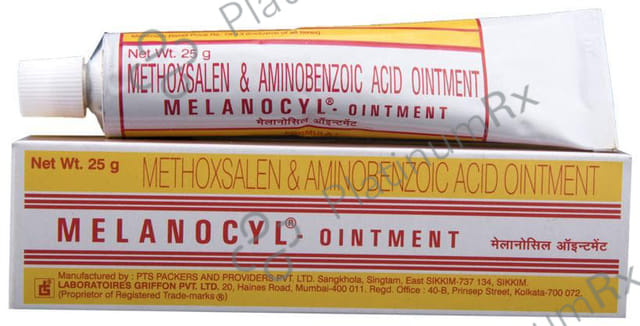
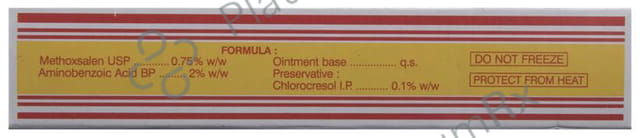
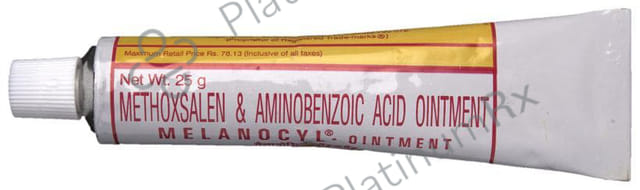
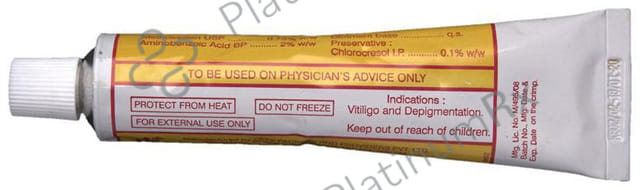
Franco-Indian Pharmaceuticals Pvt. Ltd.
Delivery by
...
FDA & GMP Certified
Long Expiry (>8 Months)
15 Days Easy Returns
General Information
Have a question?

Genuine Medicine
Pay On Delivery
Secure Payment

LegitScript Certified Online Pharmacy


More About Melanocyl Ointment 25gm
Quick Summary
Melanocyl Ointment 25gm is a prescription topical medication containing aminobenzoic acid and methoxsalen. It is primarily used to treat skin conditions such as vitiligo and severe psoriasis. Methoxsalen belongs to a group of medicines called psoralens, which increase the skin's sensitivity to ultraviolet (UV) light. Aminobenzoic acid is often included to help modulate UV absorption or provide a degree of photo-protection. This combination is typically used as part of PUVA (Psoralen + Ultraviolet A) therapy to help repigment skin or clear inflammatory patches.
Detailed Description
Melanocyl Ointment 25gm is a prescription topical medicine that contains methoxsalen and aminobenzoic acid. Methoxsalen belongs to a group of medicines called psoralens. Psoralens make the skin more sensitive to ultraviolet A (UVA) light. This effect is used in a treatment called PUVA therapy, where controlled UVA exposure is combined with psoralen application. PUVA therapy is used in conditions such as vitiligo and severe psoriasis to help restore skin colour or reduce thickened, inflamed patches.
Aminobenzoic acid is included to help regulate how the skin absorbs UVA light and to provide some protection against excessive exposure. This combination allows the treatment to be effective while reducing the risk of unwanted damage.
The medicine is applied to affected areas before UVA therapy. By increasing the skin’s response to light, it may encourage repigmentation in vitiligo or help clear psoriatic plaques. Because methoxsalen increases sensitivity to light, treatment must be carefully supervised.
Patients are advised to avoid unnecessary sunlight after use, wear protective clothing, and use UVA‑blocking sunglasses. These precautions reduce the risk of burns and long‑term skin damage while allowing the therapy to work safely.
Uses of Melanocyl Ointment 25gm
Melanocyl Ointment 25gm may be indicated by your doctor for:
Vitiligo
To encourage repigmentation of white patches of skin.
Severe Psoriasis
Management of extensive or treatment-resistant plaque psoriasis.
Mycosis Fungoides
A type of cutaneous T-cell lymphoma (skin cancer) where other treatments have failed.
Alopecia Areata
Occasionally used for specific types of inflammatory hair loss.
Benefits of Melanocyl Ointment 25gm
Melanocyl Ointment 25gm may provide benefits such as:
- Improved skin pigmentation: Helps stimulate the return of natural colour in areas affected by vitiligo.
- Reduction of thickened plaques: Supports clearing of scaly, inflamed patches in severe psoriasis, improving skin texture and comfort.
- Control of skin lesions: Assists in managing symptoms of mycosis fungoides (a rare skin lymphoma), especially when other treatments have not worked.
- Enhanced light therapy response: Increases the effectiveness of PUVA therapy by making the skin more responsive to UVA light.
- Better quality of life: By improving skin appearance and reducing discomfort, it can help patients feel more confident and comfortable.
Side Effects of Melanocyl Ointment 25gm
Common side effects of Melanocyl Ointment 25gm may include
- Redness of the skin (similar to a sunburn)
- Itching (pruritus)
- Dry or flaky skin
- Nausea (though more common with oral forms, it can occur with topical use)
Uncommon side effects of Melanocyl Ointment 25gm may include
- Blistering of the treated area
- Darkening of the skin (hyperpigmentation)
- Premature aging of the skin (wrinkling or thinning)
- Dizziness
Serious side effects that require immediate medical attention
- Severe skin burns or painful blistering
- Eye pain or vision changes
- Signs of a severe allergic reaction (swelling of the face, difficulty breathing)
- New skin growths or changes in existing moles (increased risk of skin cancer)
Always consult your doctor if you notice any unusual symptoms while taking Melanocyl Ointment 25gm.
Directions for Use
Melanocyl Ointment 25gm is used as part of PUVA therapy under a dermatologist's supervision.
- This medicine is used in combination with controlled UVA light treatment and is not intended for use on its own.
- Apply the medicine only to the areas instructed by your doctor. Avoid applying it to unaffected skin.
- Follow the exact timing given by your doctor between application and UVA exposure, as this timing is important for both safety and effectiveness.
- After application, the skin becomes highly sensitive to light. Avoid sunlight and other UV exposure unless specifically advised.
- Do not increase the amount used or frequency of treatment on your own, even if symptoms persist.
- If you miss a scheduled treatment session, contact your doctor for advice rather than adjusting the schedule yourself.
- Wash your hands thoroughly after application unless your hands are the treated area.
- Keep follow-up appointments so your doctor can monitor your response and adjust therapy if needed.
How it works
Melanocyl Ointment 25gm contains Methoxsalen and Aminobenzoic Acid. It is used with controlled ultraviolet A (UVA) exposure as part of PUVA therapy under medical supervision.
Methoxsalen makes the skin more sensitive to UVA light. After application and UVA exposure, it becomes active in the skin and interacts with cellular DNA. This helps reduce excessive skin cell activity in conditions such as psoriasis and may support repigmentation in vitiligo by influencing skin cell responses to light.
Aminobenzoic acid affects how ultraviolet light is absorbed at the skin surface, helping to modulate the overall UV exposure during treatment.
Because methoxsalen increases sensitivity to sunlight and UVA, treatment is always carried out under specialist supervision with controlled light exposure. Patients are also advised to avoid unprotected sunlight to reduce the risk of skin and eye damage.
Safety Advice for Melanocyl Ointment 25gm

Allergy
Unsafe
Do not use if you have a known allergy to methoxsalen, aminobenzoic acid, or psoralens. Seek immediate medical help if allergic reactions occur.

Breastfeeding
Unsafe
PUVA therapy is generally avoided during breastfeeding. Discuss alternatives with your doctor.

Pregnancy
Unsafe
Not recommended during pregnancy due to the risk of harm to the unborn child. Use only if clearly advised by a specialist.

Driving
Caution
May cause eye sensitivity to light. Avoid driving immediately after treatment unless your vision is clear.

Alcohol
Limited information
No direct interaction known, but alcohol may worsen skin sensitivity. Consult your doctor before use.

Liver
Caution
Use with care in patients with liver problems, as the metabolism of methoxsalen may be affected.

Kidney
Limited information
Limited data available. Discuss with your doctor if you have kidney disease.

Children
Caution
PUVA therapy is rarely used in children. Only under strict specialist supervision.

Elderly patients
Caution
Older adults may be more sensitive to light and at higher risk of side effects. Close monitoring is advised.
Quick Tips for Melanocyl Ointment 25gm
- Follow your doctor’s instructions carefully. This medicine is always used under medical supervision as part of PUVA therapy.
- Protect your eyes. Wear wrap‑around UVA‑blocking sunglasses during and after treatment to reduce the risk of cataracts.
- Limit sun exposure. Avoid direct sunlight for at least 24–48 hours after therapy. Cover up with clothing and apply sunscreen to exposed areas.
- Do not self‑adjust the dose. Never increase the amount or change the timing of treatment on your own, as this can cause burns or other serious side effects.
- Watch for skin reactions. Report severe redness, blistering, or pain to your doctor immediately.
- Avoid during pregnancy and breastfeeding. This medicine is not recommended unless a specialist advises otherwise.
- Check other medicines. Tell your doctor about all medicines you are taking, since some can make your skin more sensitive to light.
- Keep appointments. Regular follow‑ups allow your doctor to monitor progress and adjust treatment safely.
- Take care of your skin. Stay hydrated and use gentle skincare to support healing and comfort during therapy.
Storage Advice
- Keep at room temperature (generally between 20–25°C).
- Store away from direct sunlight and heat, since the medicine is light‑sensitive.
- Do not refrigerate or freeze unless your pharmacist specifically advises.
- Keep tightly closed in its original container to protect from moisture and contamination.
- Store out of reach of children and pets to prevent accidental ingestion.
- Avoid bathroom storage because humidity can affect the medicine’s stability.
- Check the expiry date and do not use it after it has passed.
Drug-Food Interaction
- Furocoumarin‑containing foods (Caution): Avoid eating large amounts of limes, figs, parsley, parsnips, mustard, carrots, or celery. These foods naturally contain psoralens, which can increase sensitivity to light and raise the risk of burns during therapy.
Interactions with Other Drugs
- Photosensitizing Drugs (Unsafe): Avoid combining with medicines that increase light sensitivity, such as tetracyclines, sulfonamides, thiazides, or phenothiazines. This can greatly increase the risk of burns.
- Coal Tar (Caution): Using coal tar products together with psoralens significantly raises the chance of severe skin reactions and burns.
Drug-Disease Interactions
- Skin Cancer (Unsafe): Do not use if you have a history of melanoma or squamous cell carcinoma, as psoralens can worsen these conditions.
- Lupus / Porphyria (Unsafe): These conditions already involve light sensitivity, and methoxsalen can severely aggravate symptoms.
- Aphakia (Unsafe): Patients without a lens in the eye are at higher risk of retinal damage from UVA exposure.
- Cataracts (Caution): Use with extreme care, since psoralens can worsen clouding of the lens.
What If You Forget to take Melanocyl Ointment 25gm?
If you miss a dose before your PUVA session, don’t try to make up for it by applying extra. Just skip it and let your doctor know, since they’ll decide whether the treatment needs to be rescheduled. Do not expose yourself to UVA light without the medicine, because the timing and dose have to be exact for safety. Simply continue with your next planned session as instructed.
FAQ
References
- https://www.mayoclinic.org/drugs-supplements/methoxsalen-topical-route/description/drg-20064753
- https://medlineplus.gov/ency/article/002518.htm
- https://www.mdpi.com/2227-9059/11/10/2686
- https://www.ncbi.nlm.nih.gov/books/NBK304315/
- https://www.drugs.com/dosage/methoxsalen-topical.html
- https://go.drugbank.com/drugs/DB00553
Fact Box
Therapeutic Class
Dermatology
Action Class
Photosensitising agent (used in PUVA therapy)
Chemical Class
Psoralen (Methoxsalen) + UV-absorbing agent (Aminobenzoic Acid)
Habit Forming
No
Disclaimer
PlatinumRx is committed to providing reliable and accurate information to support informed customer decisions. However, all information made available on the Platform, including product descriptions, comparisons, and other content, is provided solely for general informational purposes. Such information is not intended to diagnose, prevent, treat, or cure any medical condition, nor should it be relied upon as a substitute for professional medical advice, diagnosis, or treatment.

Customers also bought


More Medicines By Franco-Indian Pharmaceuticals Pvt. Ltd.
More Medicines With Aminobenzoic Acid 2% w/w + Methoxsalen 0.75% w/w
Top Selling Medicines
Top Selling Devices
Top Selling Health Products


