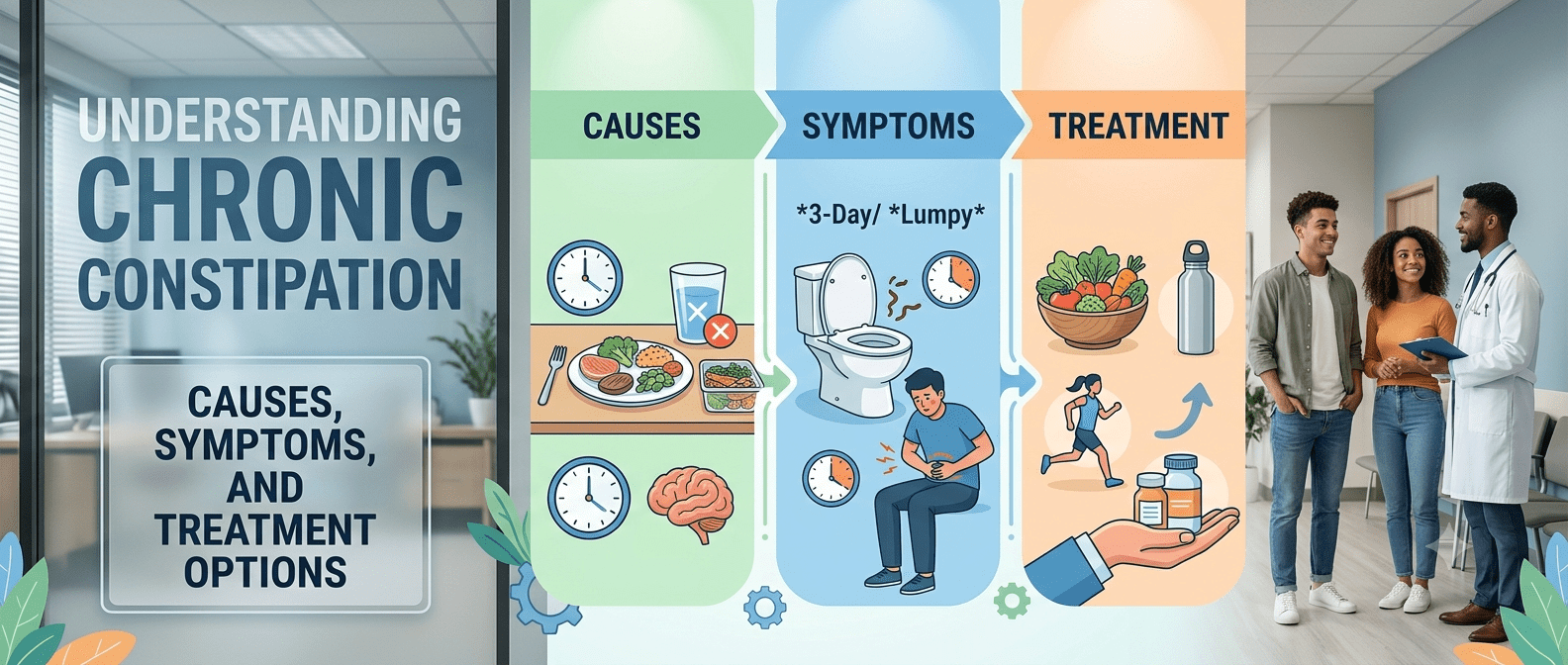
Occasional constipation can happen after a change in routine, while travelling, or when your diet changes. It often improves within a short time. But when constipation continues for several weeks or keeps coming back, it can affect your comfort, appetite, daily routine, and quality of life.
Chronic constipation is not simply about how often you have a bowel movement. You may also have hard or dry stools, need to strain, or feel that your bowel has not emptied completely. Since bowel habits differ from person to person, it is helpful to pay attention to changes from what is normal for you. Understanding the possible causes can help you find an approach that is appropriate for your symptoms.
Understanding Chronic Constipation
Chronic constipation is generally characterised by infrequent bowel movements or significant difficulty passing stool that lasts for an extended period. While healthy bowel habits vary from one person to another, medical professionals usually define this condition as having fewer than three bowel movements per week.
Your digestive system is a complex process that relies on water, fibre, and regular muscle movement to function properly. When waste moves too slowly through the colon, the bowel absorbs too much water. This causes the stool to become hard, dry, and difficult to pass. This cycle can create a persistent sense of unease and physical strain that disrupts your daily routine.
Recognising the Symptoms
The symptoms of chronic constipation often go beyond just the frequency of your bowel movements. Many people experience a cluster of physical signs that indicate the digestive system is not functioning as efficiently as it should. Common signs may include:
- Passing fewer than three stools per week
- Stools that are lumpy, hard, or dry
- The need to strain significantly during a bowel movement
- A persistent sensation that your rectum is blocked
- A feeling that you cannot fully empty your bowels even after passing stool
You might also notice general abdominal discomfort or gas. Because the bowel is not emptying efficiently, these symptoms can linger and cause ongoing distress throughout the day. Chronic constipation can also lead to secondary issues like bloating and a generalized feeling of heaviness in the lower abdomen. It is helpful to track these symptoms to share accurate information with your healthcare provider during an assessment.
Common Clinical Causes
Constipation rarely has a single cause. It is usually the result of several different factors working together over time.
Lifestyle and Dietary Factors
A diet low in fibre is a frequent contributor to chronic constipation. Fibre adds bulk to the stool and helps it move through the digestive tract. Without enough water to help fibre work, the system naturally slows down. A lack of regular physical activity can also contribute to a sluggish bowel. Simple changes like taking daily walks or increasing your intake of fruits, vegetables, and whole grains can often make a noticeable difference in how your digestive system behaves.
Medical and Physiological Causes
Sometimes the issue is related to how the muscles in the bowel contract. If these muscles do not work in a coordinated way, waste cannot move forward effectively. This is often referred to as pelvic floor dysfunction. Underlying conditions like an underactive thyroid, diabetes, or irritable bowel syndrome can also play a significant role in how your body processes waste.
Medication-Related Constipation
It is very important to review any medicines you are taking with your doctor. Many common treatments, such as certain pain relievers, iron supplements, blood pressure medications, and antacids, can cause constipation as a side effect. If you suspect your medication is the cause, do not stop taking it without speaking with a doctor, as they may be able to suggest an alternative or a way to manage the side effects.
Treatment and Management Strategies
The most effective treatment plans combine long-term lifestyle adjustments with temporary support from medication when needed.
Lifestyle Adjustments
Managing constipation often begins with making small, consistent changes to your daily habits. These adjustments can help support your digestive system and encourage more regular function:
- Increase dietary fibre: Gradually add more fibre-rich foods to your meals, such as whole grains, legumes, fresh fruits, and vegetables. Fibre acts as a natural bulking agent that helps waste move through your system.
- Prioritise hydration: Drinking enough water throughout the day is essential, especially when you increase your fibre intake. Fibre requires plenty of fluid to move through the bowel effectively.
- Establish a routine: Try to set aside time for the bathroom at the same time each day. Often, the best time is shortly after a meal, as eating helps stimulate the natural movement of the bowels.
- Stay active: Regular physical activity, such as a brisk daily walk, can help stimulate the natural contractions of your intestinal muscles, making it easier for waste to pass.
- Listen to your body: When you feel the urge to have a bowel movement, try to go as soon as possible. Delaying the urge can make the stool harder and more difficult to pass later.
Medicines for Chronic Constipation
When lifestyle changes are not enough, your doctor may recommend medication to help you get back on track. The right option depends on your symptoms, how long you have been constipated, your medical history, and any other medicines you take.
Two commonly recommended options are:
These medicines work in different ways and may not be suitable for everyone. Ask your doctor which option is appropriate for you and how to use it safely.
When to Seek Medical Advice
While many cases of constipation can be managed with simple lifestyle changes, some situations require a professional assessment to rule out more complex issues. Please consult your doctor if you notice any of the following changes:
- Unexplained weight loss: Losing weight without trying can be a sign that your body is not absorbing nutrients correctly or that there is an underlying issue.
- Blood in your stool: Finding blood on the toilet paper or within the stool should always be evaluated by a healthcare professional.
- Severe and persistent abdominal pain: If you experience sharp or ongoing pain that does not resolve, seek advice to ensure there is no obstruction.
- Sudden onset: If your constipation appears suddenly and is accompanied by a fever or frequent vomiting, seek medical attention promptly.
- Change in bowel habits: If you are over the age of 50 and notice a new, persistent change in your bowel patterns, it is important to get checked.
- Failure to improve: If you have tried lifestyle changes and over-the-counter support for several weeks without any relief, you should speak with a doctor to discuss further options.
The Bottom Line
Chronic constipation can be uncomfortable and may begin to affect your daily routine. Changes to your diet, fluid intake, physical activity, and toilet habits may help improve bowel movements. If these changes are not enough, a doctor may recommend a laxative that is suitable for you.
Speak with a doctor if constipation does not improve or is accompanied by blood in the stool, unexplained weight loss, or persistent abdominal pain. Understanding what may be causing the problem can help guide the right treatment and provide longer-lasting relief.
Written & Reviewed by:- Syed Jommy Abbas