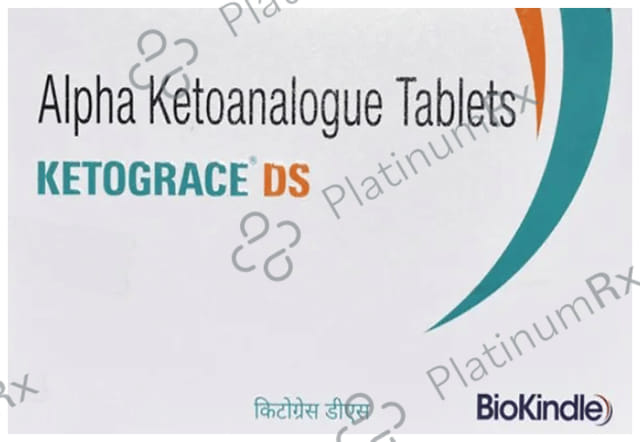
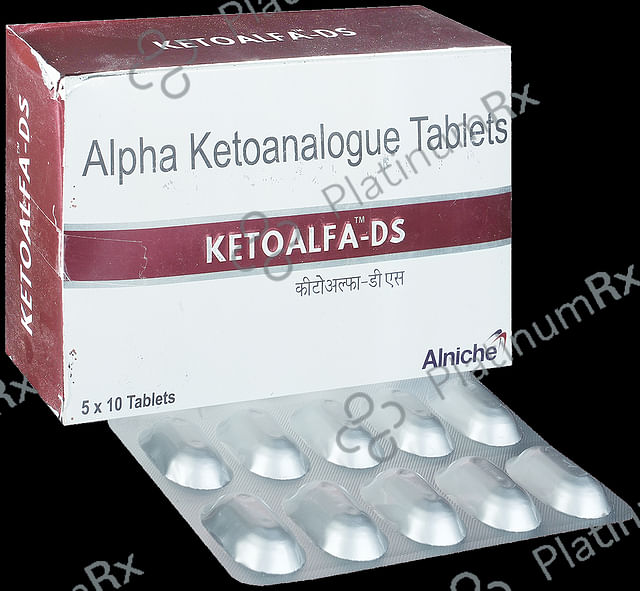
Ketograce DS Tablet

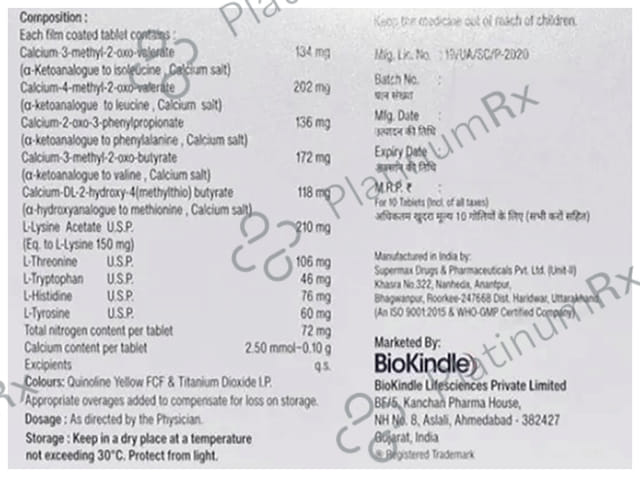
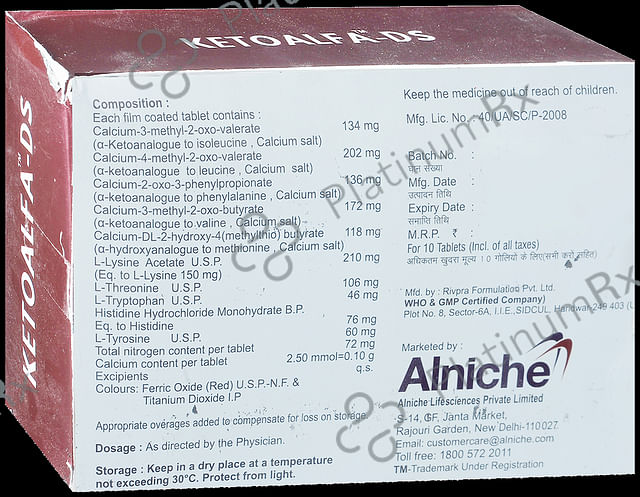
Ketograce DS Tablet combination brings together calcium salts of keto and hydroxy acid "analogues" (nitrogen-free building blocks) of valine, isoleucine, leucine, phenylalanine and methionine, along with five essential amino acids: histidine, lysine, threonine, tryptophan and tyrosine. It is used alongside a doctor-prescribed low-protein diet in people with chronic kidney disease (CKD), usually in the pre-dialysis or dialysis stages. The idea is simple: the body still needs these amino acids to make protein, but a failing kidney struggles to clear the nitrogen waste that comes from eating them directly. This combination supplies the amino acid "skeleton" without extra nitrogen, so the body can still build protein while the diet stays low in protein and the kidneys are spared some of their workload.
Written by: Radhika B Shiraguppi, B. Pharma
Reviewed by: Dr. Jay Faldu, MBBS
Last updated on: 24-09-2026
Delivery by
...
FDA & GMP Certified
Long Expiry (>8 Months)
15 Days Easy Returns
Medicine Comparison
Have a question?

Genuine Medicine
Pay On Delivery
Secure Payment

LegitScript Certified Online Pharmacy


More About Ketograce DS Tablet
Quick Summary
Ketograce DS Tablet combination brings together calcium salts of keto and hydroxy acid "analogues" (nitrogen-free building blocks) of valine, isoleucine, leucine, phenylalanine and methionine, along with five essential amino acids: histidine, lysine, threonine, tryptophan and tyrosine. It is used alongside a doctor-prescribed low-protein diet in people with chronic kidney disease (CKD), usually in the pre-dialysis or dialysis stages. The idea is simple: the body still needs these amino acids to make protein, but a failing kidney struggles to clear the nitrogen waste that comes from eating them directly. This combination supplies the amino acid "skeleton" without extra nitrogen, so the body can still build protein while the diet stays low in protein and the kidneys are spared some of their workload.
Detailed Description
Chronic kidney disease makes it harder for the body to remove the nitrogen waste (urea) that builds up after eating protein. One accepted way to ease this load is a low-protein or very-low-protein diet, but eating too little protein for too long can lead to malnutrition and muscle loss. This combination is designed to close that gap. Four of its ingredients are calcium salts of the keto acid "analogues" of valine, isoleucine, leucine and phenylalanine, and one is the calcium salt of the hydroxy acid analogue of methionine. In the body, these analogues pick up a nitrogen group that is already circulating (borrowed from the breakdown of other amino acids) and turn into the actual amino acid the body needs, without adding a fresh nitrogen load. The other five ingredients, histidine, lysine, threonine, tryptophan and tyrosine, are supplied as the essential amino acids themselves, because CKD also raises the body's requirement for these.
This approach is meant strictly as a companion to a supervised low-protein diet, not a stand-alone treatment. It does not reverse kidney damage or restore lost kidney function; it helps the body cope with a protein-restricted diet while still getting the essential amino acids it needs. Because every active ingredient here is a calcium salt, the combination also adds a meaningful amount of calcium to the diet each day, which is generally useful for CKD patients who often run low on calcium, but it also means blood calcium needs regular checking. This combination is meant to be started, adjusted and monitored by a nephrologist and renal dietitian working together, not self-directed.
Uses of Ketograce DS Tablet
- Supporting a low-protein or very-low-protein diet in adults with chronic kidney disease, stages 3 to 5, who are not yet on dialysis.
- Supporting nutrition in some patients already on dialysis who are following a protein-restricted diet.
- Helping the body still make protein and maintain essential amino acid levels while dietary protein is deliberately reduced.
- Helping ease the phosphorus, potassium and nitrogen waste burden that comes with a normal protein intake, as part of an overall CKD diet plan.
Benefits of Ketograce DS Tablet
- Lets protein stay restricted safely - it supplies the essential amino acids the body needs so a low-protein diet is less likely to cause malnutrition.
- Nitrogen-sparing design - the keto and hydroxy acid analogues are converted into amino acids using nitrogen already in the body, instead of adding a new nitrogen load for the kidneys to clear.
- Helps ease phosphorus and potassium burden - as part of a protein-restricted diet, it is linked to lower phosphorus and reduced nitrogen waste generation.
- May help delay dialysis - in people following an advanced-CKD, protein-restricted diet, supplementation of this kind has been linked to slower progression toward dialysis.
- Supplies calcium - useful in CKD, where calcium levels often run low, though this same feature needs monitoring (see Safety Advice and Side Effects below).
Side Effects of Ketograce DS Tablet
Common Side Effects (Usually Mild and May Lessen With Continued Use)
- Mild nausea
- Occasional vomiting or general stomach upset
Serious Side Effects (Seek Urgent Medical Attention)
- Hypercalcemia (high blood calcium) - this is a named, drug-specific risk, not just a background possibility. Because every active ingredient in this combination is a calcium salt, published studies have shown blood calcium levels rising during treatment, and in some cases severe enough that the dose had to be lowered or treatment paused until levels settled. This risk has been documented in both adults and children taking this type of combination. If it happens, it needs prompt medical evaluation, not a "wait and see" approach.
Directions for Use
Ketograce DS Tablet are usually taken with meals, spread across the day at the times your nephrologist or dietitian schedules, because that timing lines up with when dietary protein is actually being eaten and restricted. Swallow each tablet whole with a glass of plain water; do not crush, chew or break the tablets unless your doctor specifically tells you to, since breaking them can change how the calcium salts are released in the gut. Try to take it at the same times every day, since a steady daily pattern makes it easier for your care team to judge how well it is working at your follow-up visits. This combination is only meant to be taken alongside your prescribed low-protein or very-low-protein diet, not on its own, so do not quietly go back to a normal-protein diet just because you are taking the tablets, and do not stop the tablets on your own even if you feel well. If your nephrologist or dietitian changes how strictly your protein is being restricted, your tablet dose is likely to change too, so keep both reviewed together at the same visits.
How it works
Normal protein digestion produces amino acids, and using amino acids for energy or for building new protein leaves behind a nitrogen "leftover" that becomes urea, which a healthy kidney clears easily but a damaged kidney struggles with. The four keto acid components here (the calcium salts related to valine, isoleucine, leucine and phenylalanine) and the one hydroxy acid component (the calcium salt related to methionine) are essentially "the amino acid minus its nitrogen part." Inside the body, an enzyme reaction called transamination attaches a nitrogen group, borrowed from the normal breakdown of other, non-essential amino acids, onto these analogues, turning each one into the real amino acid the body needs. Because that nitrogen is recycled rather than newly added from the diet, the kidneys are asked to clear less nitrogen waste overall, even though the body still gets a usable supply of these amino acids. The remaining five ingredients (histidine, lysine, threonine, tryptophan and tyrosine) are given as finished essential amino acids because CKD increases the body's day-to-day need for them. This whole mechanism only delivers its intended benefit when dietary protein is actually kept low; taking this combination while eating a normal, unrestricted amount of protein does not recreate the same nitrogen-sparing effect.
Safety Advice for Ketograce DS Tablet

Pregnancy
Limited information
Published experience in pregnancy is limited to individual case reports. In one published case, a woman with advanced CKD already using this type of combination became pregnant, and her care team reduced the dose and increased dietary protein slightly for the rest of the pregnancy, under close nutritional monitoring, with a live birth reported. This is not general guidance for every pregnant woman; it shows that use in pregnancy, if it happens, needs individualised dose changes and close nephrology and dietitian supervision, not routine unsupervised use.

Breastfeeding
Limited information
In the same published case, breastfeeding was started after delivery and continued for about one month before being stopped. This is a single reported experience rather than an established safety pattern, so breastfeeding while using this combination should be discussed with the treating doctor.

Alcohol
Limited information
This combination is part of a structured, kidney-friendly eating plan. Regular or heavy alcohol use can work against the goals of that diet and put extra strain on the kidneys and liver, so it is worth discussing your alcohol intake with your nephrologist or dietitian.

Driving
Limited information
This is a nutritional supplement, not a sedating medicine, and it is not known to affect alertness or reaction time.

Kidney
Limited information
This combination is specifically intended for people with chronic kidney disease who are on a protein-restricted diet; it is used under nephrology supervision, with periodic checks of kidney function, blood calcium and phosphate.

Liver
Limited information
Tell your doctor about any liver condition before starting, since the way the body handles amino acids and calcium can be affected by liver disease as well as kidney disease.

Children
Limited information
In a study of growth-delayed children with chronic kidney failure, this type of calcium keto/hydroxy acid combination improved growth measurements, but some children developed high blood calcium that required a brief pause in treatment. Use in children needs specialist paediatric nephrology supervision.

Elderly patients
Limited information
No separate dosing pattern is described for older adults; they follow the same calcium monitoring and dietary supervision as other adults using this combination.
Quick Tips for Ketograce DS Tablet
- Take it exactly as timed and dosed by your nephrologist or dietitian, alongside your prescribed low-protein diet, not instead of it.
- Swallow tablets with a glass of plain water.
- Keep a steady daily routine so your care team can judge its effect accurately at follow-up visits.
- Do not add extra calcium supplements, calcium-based antacids or vitamin D products on your own; check with your doctor first.
- Report any signs that concern you, especially unusual tiredness, loss of appetite, or feeling generally unwell, promptly rather than waiting for your next scheduled visit.
- Keep every blood test appointment; calcium and kidney function checks are how your team keeps this combination safe for you.
Storage Advice
Store in a cool, dry place, away from direct sunlight and moisture, in its original container. Keep it out of reach and sight of children and pets. Do not use tablets past their printed expiry date.
Drug-Food Interaction
The single most important "food interaction" here is protein itself: this combination is designed to work with a low-protein or very-low-protein diet, and its nitrogen-sparing benefit depends on protein actually being restricted as prescribed. Eating a normal or high-protein diet while taking this combination does not give the same benefit and can undermine the point of the therapy. Since each active ingredient already contributes calcium, be cautious about layering on additional calcium-rich foods, calcium-fortified products, or calcium supplements without checking with your dietitian, since this can push total calcium intake higher than intended.
Interactions with Other Drugs
- Vitamin D and vitamin D analogues (such as calcitriol) - Vitamin D increases how much calcium the gut absorbs. Taking it together with a calcium source like this combination can trigger or worsen hypercalcemia, so calcium levels need closer monitoring when both are used together.
- Calcium-containing phosphate binders or other calcium supplements - Many CKD patients also take calcium-based phosphate binders (such as calcium carbonate or calcium acetate) or separate calcium supplements. Because this combination is itself a set of calcium salts, combining it with other calcium sources adds up and increases the chance of hypercalcemia; your care team may need to adjust one or the other.
- Tetracycline antibiotics (such as doxycycline) and fluoroquinolone antibiotics (such as ciprofloxacin) - Calcium can bind to these antibiotics in the gut and reduce how much of the antibiotic is absorbed, making the antibiotic less effective. If a tetracycline or fluoroquinolone antibiotic is prescribed, doses are usually spaced a few hours apart from calcium-containing products, and your doctor or pharmacist should be told you are taking this combination.
Drug-Disease Interactions
- Hypercalcemia - This combination is not appropriate if blood calcium is already high, since adding more calcium salts would make this worse.
- Disorders of amino acid metabolism - Including a personal or family history of conditions such as hereditary phenylketonuria (an inherited condition where the body cannot break down the amino acid phenylalanine normally), this combination is not appropriate, since it changes the body's amino acid handling in ways that can be unsafe in these conditions.
- Earlier-stage kidney disease without a supervised low-protein diet plan - This combination is built around advanced CKD care paired with a professionally guided protein-restricted diet. Taking it without an actual, supervised low-protein diet in place is not how it is meant to be used, and it does not reverse or stop kidney disease on its own; it is only a nutritional adjunct to that diet, used under a nephrologist's care.
Daily Dose
The number of tablets and the timing are worked out individually by your nephrologist and dietitian, based on your body weight and how strictly your protein intake is being restricted, for example whether you are on a low-protein diet or a very-low-protein diet. Because dosing is tied so closely to your personal diet plan, there is no single standard daily amount that applies to everyone. Always follow the exact schedule your doctor has prescribed, and do not change the amount or frequency on your own.
Overdose
Taking more of this combination than prescribed mainly raises the risk of hypercalcemia, since every active ingredient is a calcium salt. If you or someone else has taken more than the prescribed amount, contact your doctor or nearest hospital promptly rather than waiting to see if symptoms appear.
What If You Forget to take Ketograce DS Tablet?
If you miss a dose, take it as soon as you remember, unless it is almost time for your next scheduled dose. In that case, skip the missed one and continue with your regular schedule. Never take two doses together to make up for a missed one.
When to contact doctor
Contact your doctor promptly if you notice:
- Symptoms that could point to high blood calcium, such as unusual tiredness, loss of appetite, or feeling generally unwell, especially if they appear soon after starting or after a dose change.
- Persistent nausea or vomiting that does not settle.
- Any difficulty sticking to your prescribed low-protein diet, since this affects how well this combination can work.
- Any new symptom that worries you, or if you suspect you have taken more than your prescribed dose.
FAQ
References
- Ketoacid Analogues Supplementation in Chronic Kidney Disease and Future Perspectives
- Keto Analogues in Patients with Chronic Kidney Disease with or Without Kidney Transplantation
- Changes in serum calcium caused by supplementation of low protein diets with keto-acid analogues in patients with chronic renal failure (1981-01-01)
- Oral essential aminoacid and ketoacid supplements in children with chronic renal failure (1983-01-01)
- Is there a role for ketoacid supplements in the management of CKD? (2015-01-01)
- Case report: nutritional intervention supplemented with ketoanalogues in chronic kidney disease during pregnancy (2026-01-01)
- Multivalent cations interactions with fluoroquinolones or tetracyclines: A cross-sectional study
- Medical Nutritional Therapy for Patients with Chronic Kidney Disease not on Dialysis: The Low Protein Diet as a Medication
- Health Professional Fact Sheet
- Kidney disease
Fact Box
Therapeutic Class
Renal nutrition therapy (chronic kidney disease diet-management adjunct)
Action Class
Nitrogen-sparing keto acid/hydroxy acid analogue and essential amino acid replacement therapy
Chemical Class
Calcium salts of branched-chain and aromatic keto acid analogues (valine, isoleucine, leucine, phenylalanine) and a methionine hydroxy acid analogue, combined with the free essential amino acids histidine, lysine, threonine, tryptophan and tyrosine
Habit Forming
No
Disclaimer
PlatinumRx is committed to providing reliable and accurate information to support informed customer decisions. However, all information made available on the Platform, including product descriptions, comparisons, and other content, is provided solely for general informational purposes. Such information is not intended to diagnose, prevent, treat, or cure any medical condition, nor should it be relied upon as a substitute for professional medical advice, diagnosis, or treatment.

Customers also bought



More Medicines By Biokindle Lifesciences Pvt. Ltd.
More Medicines With Calcium 3-Methyl-2-Oxo-Valerate 134mg + Calcium 4-Methyl-2-Oxo-Valerate 202mg + Calcium 2-Oxo-3-Phenylpropionate 136mg + Calcium 3-Methyl-2-Oxo-Butyrate 172mg + Calcium DL-2-Hydroxy-4-(Methylthio)-Butyrate 118mg + L-Lysine Acetate 210mg + L-Threonine 106mg + L-Tryptophan 46mg + L-Histidine 76mg + L-Tyrosine 60mg
Top Selling Medicines
Top Selling Devices
Top Selling Health Products