PCOD vs PCOS: Key Differences, Symptoms, Causes, and Treatment Options
Last Updated: September 23, 2026
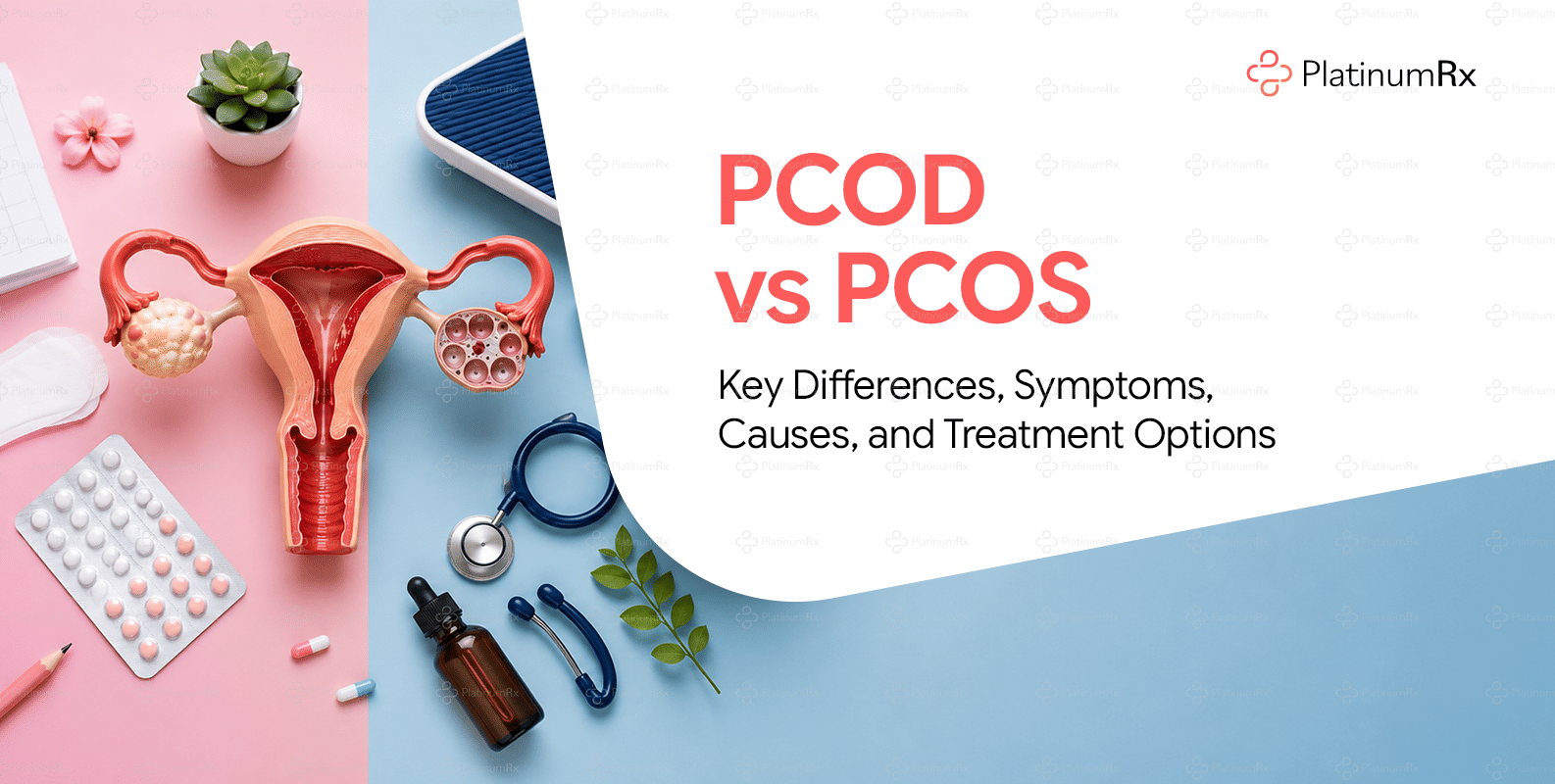
Summary
This blog clarifies the distinction between PCOD (Polycystic Ovarian Disease), a primarily ovarian condition that is milder and often manageable through lifestyle changes, and PCOS (Polycystic Ovary Syndrome), a broader hormonal and metabolic syndrome with higher long-term risks including type 2 diabetes, infertility, and cardiovascular disease. Both share overlapping symptoms such as irregular periods, weight gain, acne, and excess hair, but PCOS typically requires longer-term medical management including medications like metformin or GLP-1 receptor agonists. Neither condition has a permanent cure, but early diagnosis and consistent care can significantly reduce complications and preserve fertility.
Key Takeaways
- PCOD is primarily an ovarian disorder; PCOS is a broader hormonal and metabolic syndrome
- PCOS carries higher risks of type 2 diabetes, infertility, and cardiovascular disease
- Both share symptoms, irregular periods, acne, excess hair, weight gain, making them easy to confuse
- Lifestyle changes alone can significantly improve PCOD; PCOS usually needs long-term medical management
- \Neither condition has a permanent cure, but both are manageable with the right care
Introduction
When it comes to PCOD vs PCOS, confusion is common, and understandable. Both conditions involve the ovaries and hormonal imbalance, and both share a range of overlapping symptoms. Yet they are clinically distinct, and treating them as the same can lead to misdiagnosis and delayed care.
PCOD full form is Polycystic Ovarian Disease. PCOS stands for Polycystic Ovary Syndrome. Understanding the PCOD meaning goes beyond the name, it describes a primarily ovarian condition that is generally milder and more responsive to lifestyle changes. PCOS, by contrast, is a broader hormonal and metabolic syndrome with more significant long-term health implications.
Getting the difference between PCOS and PCOD right matters, it directly shapes how each condition is diagnosed, treated, and monitored over time.
What Is PCOD?
PCOD meaning in medical terms refers to a condition in which the ovaries produce large numbers of immature or partially mature eggs that may develop into cysts, causing the ovaries to enlarge and disrupting normal hormonal function. The PCOD full form, Polycystic Ovarian Disease, reflects its primarily ovarian nature.
In PCOD, elevated androgen levels interfere with ovulation, menstrual regularity, skin health, and weight. It is relatively common and, importantly, many women with PCOD continue to ovulate and can conceive naturally with lifestyle changes and appropriate medical support.
What Is PCOS?
PCOS is a more complex endocrine and metabolic disorder that extends well beyond the ovaries. It involves elevated androgens, significant insulin resistance, chronic inflammation, and disrupted ovulation across multiple hormonal systems. Because it is classified as a syndrome, PCOS is defined by a cluster of symptoms and metabolic abnormalities rather than a single identifiable cause.
Left unmanaged, PCOS increases the long-term risk of type 2 diabetes, infertility, cardiovascular disease, and sleep apnoea, making early diagnosis and consistent management essential.
PCOD vs PCOS: The Main Differences
| Feature | PCOD | PCOS | |
|---|---|---|---|
| Full Form | Polycystic Ovarian Disease | Polycystic Ovary Syndrome | |
| Nature | Ovarian disorder | Hormonal and metabolic syndrome | |
| Severity | Usually milder | Often more severe | |
| Ovulation | May still occur | Often significantly disrupted | |
| Fertility Impact | Moderate | Higher infertility risk | |
| Insulin Resistance | Less common | Very common | |
| Weight Gain | Possible | Frequently significant | |
| Long-Term Health Risks | Lower | Higher | |
| Lifestyle Management | Often highly effective | Usually requires long-term management |
Symptoms of PCOD and PCOS
Many symptoms overlap between PCOD vs PCOS, which is a key reason the two are so frequently confused.
- Irregular periods: Infrequent, delayed, or absent cycles. More pronounced and harder to correct in PCOS.
- Weight gain: Particularly around the abdomen. More difficult to manage in PCOS due to insulin resistance.
- Acne and oily skin: Driven by elevated androgens; often unresponsive to standard skincare.
- Excess facial and body hair (hirsutism): Present in both, but typically more marked in PCOS.
- Hair thinning: Scalp hair loss due to hormonal imbalance, seen in both conditions.
- Difficulty conceiving: More significant in PCOS due to greater ovulatory disruption.
- Fatigue and mood changes: Persistent low energy, anxiety, and mood swings linked to hormonal fluctuations.
Causes of PCOD and PCOS
The exact causes of both conditions are not fully understood. Research points to a combination of hormonal, genetic, metabolic, and lifestyle factors rather than a single root cause.
- Hormonal imbalance: Disrupted balance of oestrogen, progesterone, and androgens interferes with ovulation and egg development.
- Insulin resistance: Central to PCOS. High insulin stimulates the ovaries to produce more androgens, worsening the hormonal cycle.
- Genetics: A family history of PCOD or PCOS raises individual risk, suggesting a heritable component.
- Chronic inflammation: Closely associated with PCOS and thought to drive its metabolic complications.
- Lifestyle factors: Poor diet, inactivity, chronic stress, and excess weight worsen symptom severity in both conditions.
How Are PCOD and PCOS Diagnosed?
Diagnosis involves a combination of medical history, physical examination, blood tests, and imaging. There is no single test that confirms either condition, diagnosis is built from a picture of symptoms and findings assessed together.
- Medical history: Doctors will look at menstrual patterns, weight history, fertility concerns, skin and hair symptoms, and family history of hormonal or metabolic conditions.
- Hormonal blood tests: Key hormones typically evaluated include testosterone and other androgens, luteinising hormone (LH) and follicle-stimulating hormone (FSH), insulin levels, thyroid hormones, and prolactin. The pattern of these hormone levels helps distinguish between PCOD and PCOS and guides treatment decisions.
- Pelvic ultrasound: Imaging of the ovaries can reveal the presence of multiple small follicles or cysts. The appearance of the ovaries on ultrasound forms part of the diagnostic picture, though cyst appearance alone is not sufficient to confirm either diagnosis.
- Metabolic evaluation: In PCOS specifically, doctors will often also assess blood sugar levels and insulin resistance, cholesterol profile, blood pressure, and liver health, given the broader metabolic implications of the condition.
Understanding the difference between PCOS and PCOD helps guide not just initial diagnosis but the ongoing monitoring approach as well.
Treatment Options for PCOD and PCOS
Treatment depends on the severity of symptoms, fertility goals, metabolic health, and the overall hormonal picture. There is no one-size-fits-all approach to either condition.
Lifestyle Modification
The foundation of management for both conditions. Regular physical activity, a balanced diet, weight management, reduced refined sugars, better sleep, and stress reduction all play a meaningful role. Even a 5–10% reduction in body weight can significantly improve hormonal balance and menstrual regularity.
Medications
Where lifestyle changes alone are insufficient, doctors may prescribe a range of medications depending on the individual's primary symptoms and goals.
- Hormonal contraceptives: Regulate cycles and reduce androgen-driven symptoms like acne and excess hair
- Insulin-sensitising medicines (e.g. Metformin): Particularly relevant in PCOS to improve insulin resistance and support menstrual regularity
- Ovulation induction: For women trying to conceive with disrupted ovulation
- Acne and hair growth treatments: Topical or oral options used alongside hormonal therapy
- GLP-1 receptor agonists (e.g. semaglutide): Increasingly used in PCOS with significant insulin resistance or obesity; support weight loss, improve insulin sensitivity, and may help restore menstrual regularity
Fertility Treatment
Women with persistent infertility related to anovulation may benefit from specialist fertility care, including ovulation induction, intrauterine insemination, or in vitro fertilisation, depending on individual circumstances.
Can PCOD and PCOS Be Cured?
There is no permanent cure for either condition. Many women with PCOD see significant improvement through lifestyle changes, and symptoms may reduce considerably over time. PCOS typically requires longer-term management given its metabolic dimension. Early diagnosis and consistent follow-up remain the most important factors in reducing complications and maintaining quality of life.
Complications Associated With PCOS
Whilst both conditions carry health implications, PCOS is associated with a broader range of potential long-term complications, particularly when it remains undiagnosed or unmanaged.
Possible complications of untreated or poorly managed PCOS include type 2 diabetes, high cholesterol, hypertension, infertility, fatty liver disease, sleep apnoea, depression and anxiety, and increased cardiovascular risk. Regular monitoring, proactive management, and early intervention can reduce these risks significantly.
Diet and Lifestyle Tips for PCOD and PCOS
Whilst there is no single diet that cures PCOD or PCOS, the right lifestyle habits can meaningfully reduce symptoms, improve hormonal balance, and support long-term wellbeing.
- Prioritise high-fibre foods and lean protein
- Limit refined carbohydrates, sugary drinks, and processed foods
- Eat regular balanced meals and avoid long gaps between them
- Engage in moderate physical activity, even walking, improves insulin sensitivity and mood
- Prioritise sleep quality and stress management, as both directly worsen hormonal disruption
When Should You See a Doctor?
Seek medical evaluation if you experience any of the following:
- Irregular, infrequent, or absent periods
- Unexplained or rapid weight gain
- Difficulty conceiving
- Persistent acne unresponsive to standard treatment
- Excess facial or body hair, or scalp hair thinning
- Severe menstrual symptoms
Early diagnosis means better symptom control, lower long-term health risks, and more options for preserving fertility.
Conclusion
In the PCOD vs PCOS debate, the key distinction lies in scope. PCOD, Polycystic Ovarian Disease, is a primarily ovarian condition, often milder and highly responsive to lifestyle intervention. PCOS is a broader hormonal and metabolic syndrome that typically requires more comprehensive, long-term management. Understanding the difference between PCOS and PCOD is not just academic; it directly affects how each condition should be treated and monitored.
Both are manageable. With the right diagnosis, consistent medical guidance, and sustained lifestyle care, most women can reduce symptoms, protect fertility, and maintain good overall health. If you recognise any of the symptoms described here, speaking with your doctor is the most important first step.
FAQs About PCOD vs PCOS
References
- https://www.fertstert.org/article/S0015-0282(03)02142-2/fulltext
- https://academic.oup.com/humrep/article/33/9/1602/5056069
- https://www.japi.org/r6e7arp4/consensus-statement-for-diagnosis-of-obesity
- https://www.nature.com/articles/nrdp201657
- https://academic.oup.com/jcem/article/98/12/4565/2833703
- https://www.thelancet.com/journals/lancet/article/PIIS0140-6736(03)15268-3/fulltext