Velakast Tablet

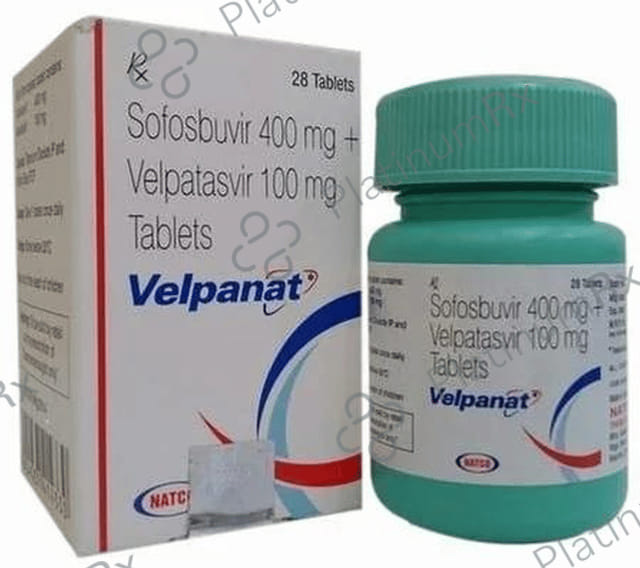
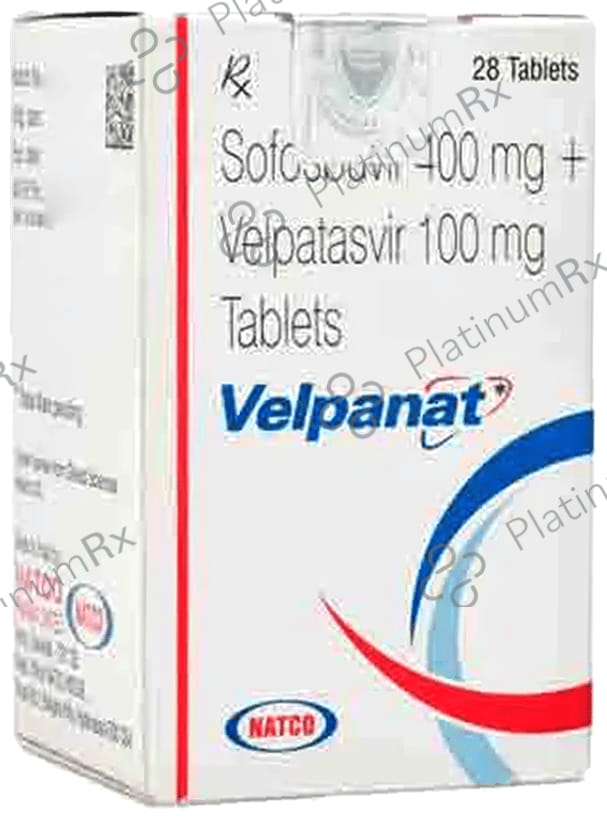
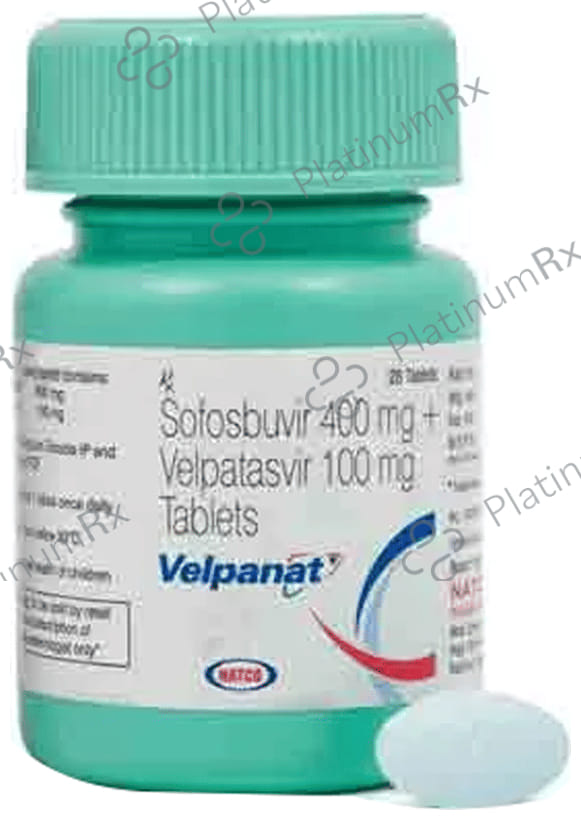
Velakast Tablet is a prescription antiviral medicine that puts two active ingredients, sofosbuvir and velpatasvir, into one tablet. It is used, alone or together with another medicine called ribavirin, to treat long-term (chronic) hepatitis C. Hepatitis C is a viral infection that damages the liver. Velakast Tablet is used in adults and in children 3 years of age and older, and it works against all six main types (genotypes) of the hepatitis C virus. It is usually taken once a day for 12 weeks. The aim of treatment is to clear the virus from the blood, which your doctor checks with a blood test after the course ends.
Written by: Syed Jommy Abbas, B. Pharma
Reviewed by: Dr. Varinderjeet Kaur, MBBS
Last updated on: 24-09-2026

Delivery by
...
FDA & GMP Certified
Long Expiry (>8 Months)
15 Days Easy Returns
Medicine Comparison
Have a question?

Genuine Medicine
Pay On Delivery
Secure Payment

LegitScript Certified Online Pharmacy


More About Velakast Tablet
Quick Summary
Velakast Tablet is a prescription antiviral medicine that puts two active ingredients, sofosbuvir and velpatasvir, into one tablet. It is used, alone or together with another medicine called ribavirin, to treat long-term (chronic) hepatitis C. Hepatitis C is a viral infection that damages the liver. Velakast Tablet is used in adults and in children 3 years of age and older, and it works against all six main types (genotypes) of the hepatitis C virus. It is usually taken once a day for 12 weeks. The aim of treatment is to clear the virus from the blood, which your doctor checks with a blood test after the course ends.
Detailed Description
Hepatitis C is a liver infection that spreads mainly through contact with infected blood. Over many years, a long-term infection can scar the liver (cirrhosis) and can lead to liver cancer. Velakast Tablet is a direct-acting antiviral. This means it attacks the virus itself instead of only easing symptoms.
The tablet holds two ingredients, and each one blocks a different protein that the hepatitis C virus needs to make copies of itself. Sofosbuvir blocks an enzyme called NS5B, and velpatasvir blocks a protein called NS5A. With both targets blocked, the virus cannot multiply and spread to new liver cells.
Velakast Tablet is used for people with chronic hepatitis C who have no liver scarring, or who have scarring but a liver that still works well (compensated cirrhosis). For people whose liver is no longer working properly (decompensated cirrhosis), it is given together with ribavirin. The adult tablet contains 400 mg of sofosbuvir and 100 mg of velpatasvir. A smaller 200 mg/50 mg tablet and a pellet form are made for children, whose dose depends on body weight.
In studies reviewed by the European Medicines Agency, 98% of adults (1,015 out of 1,035) who took Velakast Tablet for 12 weeks had no sign of the virus in their blood 12 weeks after treatment ended. Doctors call this result a sustained virologic response.
Velakast Tablet needs close medical supervision. Before you start, your doctor will test your blood for hepatitis B. Hepatitis B that is hiding in the body can become active again during or after hepatitis C treatment, and in some cases this has led to liver failure and death. This is the boxed warning, the most serious warning on the label. Your doctor will also review every other medicine you take. Some, such as the heart rhythm medicine amiodarone, can cause a dangerously slow heartbeat with Velakast Tablet, and others can stop it from working properly.
Composition
- Tablet (adult strength): 400 mg sofosbuvir and 100 mg velpatasvir
- Tablet (lower strength): 200 mg sofosbuvir and 50 mg velpatasvir
- Oral pellets: 200 mg sofosbuvir and 50 mg velpatasvir per packet, or 150 mg sofosbuvir and 37.5 mg velpatasvir per packet
The pellets are small granules made for young children and for those who have trouble swallowing tablets.
Uses of Velakast Tablet
Chronic hepatitis C with no cirrhosis or with compensated cirrhosis
Velakast Tablet is used on its own to treat long-term (chronic) hepatitis C caused by genotype 1, 2, 3, 4, 5 or 6, in adults and in children 3 years of age and older. This covers people with no liver scarring and people whose scarred liver still works well (compensated cirrhosis).
Chronic hepatitis C with decompensated cirrhosis
When liver scarring is so advanced that the liver no longer works properly (decompensated cirrhosis), Velakast Tablet is used together with another antiviral medicine, ribavirin.
Benefits of Velakast Tablet
- Works against all main virus types. Velakast Tablet is approved for hepatitis C genotypes 1, 2, 3, 4, 5 and 6, including genotype 3, which is harder to treat.
- Two actions in one tablet. The two ingredients block two different proteins the virus needs to multiply, so a single tablet attacks the virus in two ways.
- Once a day for a short, fixed course. Most people take one tablet by mouth each day for 12 weeks.
- High rate of clearing the virus. In the main adult studies reviewed by the European Medicines Agency, 98% of patients who took Velakast Tablet for 12 weeks tested negative for the virus 12 weeks after treatment ended.
- An option for people with advanced liver scarring. In adults whose liver was not working properly, around 94% of patients treated with Velakast Tablet plus ribavirin for 12 weeks tested negative for the virus 12 weeks after treatment.
- Usable with kidney disease. No dose change is needed for any level of kidney problems, including people on dialysis.
- Suitable for children. Velakast Tablet can be used from 3 years of age, with tablets and pellets dosed by body weight.
- Usually well tolerated. In the main adult studies, only 0.2% of people stopped treatment because of side effects.
Side Effects of Velakast Tablet
Common Side Effects (Usually Mild and may lessen with continued use)
- Headache
- Tiredness (fatigue) or lack of energy
- Feeling sick (nausea)
- Weakness
- Trouble falling asleep or staying asleep (insomnia)
- Feeling irritable
- Diarrhoea
- Mild rash
- Feeling low or depressed
- Vomiting or spitting up the medicine (in children younger than 6 years)
When Velakast Tablet is taken with ribavirin by adults with advanced liver scarring, the most common side effects are tiredness, a low red blood cell count (anaemia), nausea, headache, trouble sleeping and diarrhoea.
Serious Side Effects (Seek Urgent Medical Attention)
- Hepatitis B reactivation: If you have ever had hepatitis B, the virus can become active again during or after treatment. This can cause serious liver problems, including liver failure and death. Warning signs include extreme tiredness, yellowing of the skin or eyes, loss of appetite, nausea or vomiting, pale stools, stomach pain, or dark urine.
- Symptomatic bradycardia (a dangerously slow heartbeat): This has been reported in people taking the heart medicine amiodarone with sofosbuvir-containing treatment. It has usually started within hours to days, but has appeared up to 2 weeks after starting. In some cases it led to the need for a pacemaker, and one death from cardiac arrest was reported with a similar sofosbuvir medicine. Signs include fainting or near-fainting, dizziness or lightheadedness, feeling unwell, weakness, extreme tiredness, shortness of breath, chest pain, confusion or memory problems.
- Angioedema: This is a sudden swelling under the skin, which can affect the face, lips, tongue or throat. It has been reported after the medicine reached the market. Swelling of the throat or tongue can make breathing difficult and needs emergency care.
- Skin rash with blisters: Skin rashes, sometimes with blisters or angioedema-like swelling, have been reported.
- Low blood sugar (hypoglycaemia) in people with diabetes: As the liver recovers, blood sugar control can change. Serious low blood sugar has been reported in people with diabetes, and their diabetes medicines sometimes had to be changed or stopped.
Directions for Use
- Take Velakast Tablet once a day, at around the same time every day, exactly as your doctor has prescribed.
- You can take the tablet with or without food. Pick one routine and keep to it so the daily dose is easy to remember.
- Swallow the tablet whole with water. If your child cannot swallow the 400 mg/100 mg tablet, the doctor may prescribe two 200 mg/50 mg tablets or pellets instead.
- For children who use the pellets: the pellets can be swallowed without chewing, or sprinkled on one or more spoonfuls of cold or room-temperature soft food that is not acidic, such as pudding or ice cream. The whole mixture should be eaten within 15 minutes. Chewing the pellets leaves a bitter aftertaste. Children younger than 6 years should take the pellets with food.
- If you take an antacid (such as aluminium or magnesium hydroxide), take it 4 hours before or 4 hours after Velakast Tablet.
- Keep taking Velakast Tablet even if you feel well. The usual course lasts 12 weeks. Missing doses lowers the amount of medicine in your blood, so try not to skip any.
- Do not stop the medicine on your own. Talk to your doctor first.
- Refill your prescription before you run out, so there is no gap in treatment.
How it works
The hepatitis C virus survives by making copies of itself inside liver cells. To do this, it needs its own set of working parts, called proteins. Velakast Tablet blocks two of these proteins at the same time.
Sofosbuvir blocks an enzyme called NS5B polymerase. An enzyme is a protein that speeds up a job inside a cell, and this one builds new copies of the virus's genetic material (RNA). Sofosbuvir is a "prodrug", which means it is inactive when you swallow it. Inside the cell it is changed into its active form. The virus's NS5B enzyme mistakes this active form for one of the normal building blocks and adds it to the new RNA chain. Once it is added, no more building blocks can be attached, so the chain stops growing. This is called chain termination. The active form does not block the enzymes that human cells use to copy their own DNA and RNA.
Velpatasvir blocks a viral protein called NS5A. The virus needs NS5A to copy itself. With NS5A blocked, the virus cannot make new copies.
Working together: Because the two ingredients hit two different targets, the virus is blocked at two separate steps. This is how Velakast Tablet stops the hepatitis C virus from multiplying and infecting new cells, across all six main genotypes.
Safety Advice for Velakast Tablet

Pregnancy
Limited information
There are no adequate human studies showing whether Sofosbuvir + Velpatasvir on its own harms an unborn baby. Animal studies did not show harm to the developing baby. When it is taken with ribavirin, the label says the combination must not be used by pregnant women or by men whose female partners are pregnant, because ribavirin can seriously harm an unborn baby. Patients on the combination with ribavirin should avoid pregnancy during treatment and for 6 months after treatment ends. Women and men taking ribavirin should also read the ribavirin guide for its pregnancy testing, contraception and fertility advice. Tell your doctor right away if you become pregnant.

Breastfeeding
Limited information
It is not known whether Sofosbuvir + Velpatasvir passes into human breast milk. In animal studies, it passed into milk without harming the young. Talk to your doctor about how to feed your baby during treatment. If you are also taking ribavirin, the ribavirin advice on breastfeeding applies too.

Alcohol
Limited information
The label does not list a direct interaction between Sofosbuvir + Velpatasvir and alcohol. The World Health Organization notes that people with hepatitis C may benefit from avoiding alcohol.

Driving
Limited information
Headache and tiredness are the most common side effects of Sofosbuvir + Velpatasvir. If you feel tired, dizzy or unwell, do not drive or use machines until you feel alert. If you also take amiodarone, dizziness or near-fainting can be a sign of a slow heartbeat and needs urgent medical care.

Kidney
Limited information
No dose change of Sofosbuvir + Velpatasvir is needed for mild, moderate or severe kidney problems, including people on dialysis. Tell your doctor if you have kidney disease, because the ribavirin dose, if used, may need to change. There is no safety information for children with kidney problems.

Liver
Limited information
No dose change of Sofosbuvir + Velpatasvir is needed for mild, moderate or severe liver problems. People with decompensated cirrhosis take it with ribavirin and need regular check-ups and liver blood tests, including bilirubin (a yellow substance the liver clears from the blood; high levels can cause yellowing of the skin or eyes).

Children
Limited information
Sofosbuvir + Velpatasvir is used in children 3 years of age and older. The dose is based on the child's body weight. Pellets are available for young children, and children younger than 6 years should take the pellets with food.

Elderly patients
Limited information
Studies found no overall differences in safety or effectiveness between people aged 65 and over and younger adults. No dose change is needed based on age alone, though some older people may be more sensitive to the medicine.

Allergy
Limited information
Before starting, tell your doctor and pharmacist if you are allergic to sofosbuvir, velpatasvir, any other medicine, or any of the ingredients in Sofosbuvir + Velpatasvir. Swelling of the face, lips, tongue or throat (angioedema) has been reported with this medicine and needs emergency care.
Quick Tips for Velakast Tablet
- Take Velakast Tablet at the same time each day. A phone alarm can help you stay on track for the full 12 weeks.
- Tell your doctor if you have ever had hepatitis B, even many years ago.
- Keep a written list of every medicine, vitamin and herbal product you take, and show it to each doctor and pharmacist you see.
- Do not start any new medicine, including acidity tablets or St. John's wort, without checking with your doctor first.
- Space antacids 4 hours away from your dose.
- If you take amiodarone or a beta blocker for your heart, make sure your doctor knows before you start.
- If you have diabetes, check your blood sugar more often during treatment, as your needs may change.
- If you take warfarin, expect more frequent blood tests (INR) during treatment.
- Keep the tablets in their original container.
- Do not share your medicine with anyone else, even if they have hepatitis C.
- Hepatitis C spreads through blood, so do not share needles or syringes.
- Keep all doctor and laboratory appointments before, during and after treatment.
- Keeping a healthy weight may also help your liver.
navigation_tabs.precautions_for
- Hepatitis B becoming active again (boxed warning): Everyone is tested for hepatitis B before starting Velakast Tablet. In people who carry both hepatitis B and hepatitis C, hepatitis B has flared up during or after treatment, and some cases led to sudden severe liver damage, liver failure and death. The risk may be higher in people who are also taking medicines that weaken the immune system or cancer chemotherapy. People at risk are watched closely during treatment and at follow-up visits.
- Slow heartbeat with amiodarone: Taking the heart rhythm medicine amiodarone with Velakast Tablet can cause a serious slow heartbeat (symptomatic bradycardia). Using them together is not recommended. If there is no other choice, the heart is monitored closely at the start of treatment.
- Medicines that weaken its effect: Some medicines make the body clear sofosbuvir and velpatasvir faster, which lowers their levels and can stop Velakast Tablet from working well. Examples named on the label are rifampicin, St. John's wort and carbamazepine. Using these together is not recommended.
- When taken with ribavirin: All the warnings and precautions for ribavirin also apply to the combination, including its serious risks in pregnancy. Your doctor will go through the ribavirin information with you.
Storage Advice
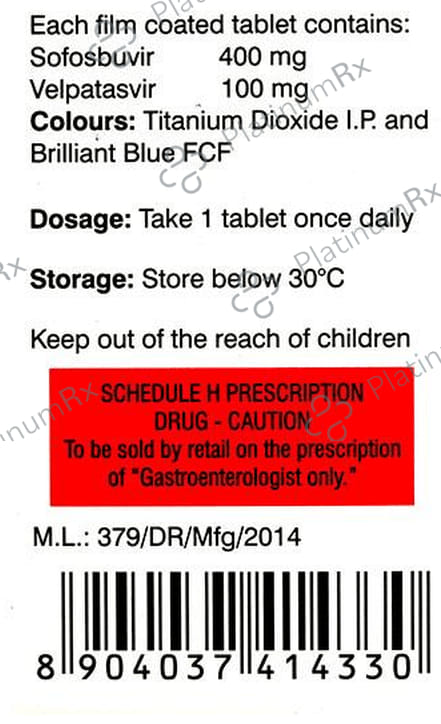
- Store Velakast Tablet below 30°C (86°F).
- Keep it in the original container it came in, tightly closed, away from excess heat and moisture. Do not store it in the bathroom.
- Do not use the tablets if the seal over the bottle opening is broken or missing.
- Keep it out of sight and reach of children. Store it in a place that is up high and away from children and pets.
- Do not flush unused tablets down the toilet. Ask your pharmacist about a medicine take-back programme, so that children, pets and other people cannot take them.
Drug-Food Interaction
- Meals: Velakast Tablet can be taken with or without food. Food raises the amount of medicine absorbed, but not in a way that changes how it should be taken.
- Normal diet: No special diet is needed unless your doctor gives you other advice.
- Pellets and soft food: When pellets are sprinkled on food, the food should be soft and non-acidic, such as pudding or ice cream, and eaten within 15 minutes.
- Alcohol: People with hepatitis C may benefit from avoiding alcohol to protect the liver.
Interactions with Other Drugs
- Amiodarone (heart rhythm medicine): Taking it with Velakast Tablet can cause a serious slow heartbeat (symptomatic bradycardia). Using them together is not recommended. If there is no other option, the label advises heart monitoring in hospital for the first 48 hours and daily heart rate checks for at least the first 2 weeks. The risk is higher in people who also take beta blockers or who have heart disease or advanced liver disease. Because amiodarone stays in the body a long time, the same care applies if it was stopped just before starting treatment.
- Antacids (such as aluminium or magnesium hydroxide): They lower the amount of velpatasvir absorbed. Take them 4 hours before or after Velakast Tablet.
- H2 blockers (such as famotidine): These acidity medicines lower velpatasvir levels. Take them 12 hours before or 12 hours after Velakast Tablet. The label caps the H2 blocker dose at the equivalent of famotidine 40 mg twice a day, and your doctor will set the dose.
- Proton-pump inhibitors (such as omeprazole, esomeprazole, lansoprazole): Using them together is not recommended because they lower velpatasvir levels. If your doctor decides one is needed, they will tell you how to time the doses.
- Rifampicin (called rifampin in the US), rifabutin, rifapentine (tuberculosis medicines): These lower the levels of both ingredients and can stop Velakast Tablet from working. Using them together is not recommended.
- Carbamazepine, phenytoin, phenobarbital (epilepsy medicines): These also lower the levels of both ingredients. Using them together is not recommended.
- St. John's wort (herbal product for low mood): This lowers the levels of both ingredients. Using them together is not recommended.
- Efavirenz (HIV medicine): This lowers velpatasvir levels. Using efavirenz-containing treatment together is not recommended.
- Tipranavir with ritonavir (HIV medicines): These lower the levels of both ingredients. Using them together is not recommended.
- Tenofovir disoproxil fumarate (HIV medicine): Velakast Tablet raises tenofovir levels, so your doctor will watch for tenofovir side effects and may check your kidneys.
- Digoxin (heart medicine): Velakast Tablet raises digoxin levels, so your doctor will check digoxin blood levels.
- Topotecan (cancer medicine): Velakast Tablet raises topotecan levels. Using them together is not recommended.
- Rosuvastatin and atorvastatin (cholesterol medicines): Velakast Tablet raises their levels, which increases the risk of muscle damage (myopathy), including a severe form called rhabdomyolysis. Your doctor may limit the rosuvastatin dose and will watch for muscle pain or weakness.
- Warfarin (blood thinner): As hepatitis C clears, liver function can change and affect warfarin. Your INR blood test will be checked more often.
- Diabetes medicines: Blood sugar control can change as the liver recovers, and serious low blood sugar has been reported. Your doctor may need to change your diabetes medicines.
- Certain immunosuppressants (medicines that calm the immune system): Their blood levels may need closer monitoring during treatment.
Drug-Disease Interactions
- Hepatitis B, now or in the past: Hepatitis B can become active again during or after treatment and can cause serious liver damage. The risk may be higher in people who are also taking medicines that weaken the immune system or cancer chemotherapy. Everyone is tested for hepatitis B before starting, and people with signs of past or current infection are watched closely during and after treatment.
- Heart disease or a slow heart rate: People with heart problems, especially those taking amiodarone or beta blockers, have a higher risk of a dangerously slow heartbeat.
- Advanced liver disease (decompensated cirrhosis): Velakast Tablet is given with ribavirin in these patients, and regular liver blood tests are needed. Advanced liver disease also raises the risk of slow heartbeat with amiodarone.
- Liver transplant or other liver problems: Tell your doctor if you have had a liver transplant or have any liver problem other than hepatitis C.
- Kidney disease or dialysis: No dose change of Velakast Tablet is needed, but tell your doctor, since the ribavirin dose may need to change. There is no safety information for people who have both decompensated cirrhosis and severe kidney disease.
- HIV infection: Velakast Tablet can be used in people with HIV, but some HIV medicines interact with it, so your doctor will check your HIV treatment.
- Diabetes: Blood sugar can drop as the liver recovers, so sugar levels need closer checks.
- Conditions where ribavirin cannot be used: The combination of Velakast Tablet with ribavirin must not be used in anyone who cannot take ribavirin, including during pregnancy.
Daily Dose
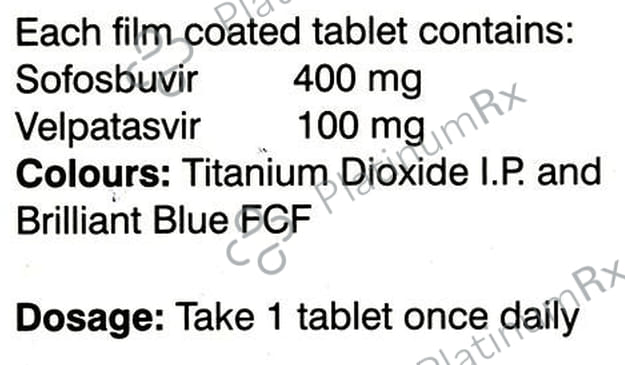
- Adults: The label's recommended dose is one tablet (400 mg sofosbuvir and 100 mg velpatasvir) taken by mouth once a day, with or without food, for 12 weeks. This applies to people without cirrhosis or with compensated cirrhosis, including people who also have HIV.
- Adults with decompensated cirrhosis: The same tablet is taken once a day together with ribavirin for 12 weeks. The ribavirin dose is set by the doctor based on body weight and blood tests.
- Children 3 years and older: The dose is based on body weight, using either the 200 mg/50 mg tablet, the 400 mg/100 mg tablet or pellets. The label's once-daily doses by weight are: under 17 kg, 150 mg sofosbuvir and 37.5 mg velpatasvir; 17 kg to under 30 kg, 200 mg sofosbuvir and 50 mg velpatasvir; 30 kg or more, 400 mg sofosbuvir and 100 mg velpatasvir. Children with decompensated cirrhosis take it together with ribavirin, dosed by body weight. Your child's doctor will choose the dose and form.
- Maximum frequency: Velakast Tablet is taken once in 24 hours.
- Kidney or liver problems: No dose change is recommended for any level of kidney or liver problems.
Always follow the dose and length of treatment your doctor prescribes. Do not change the dose or stop early without speaking to your doctor.
Overdose
If you or someone else has taken too much Velakast Tablet, call your doctor or go to the nearest hospital emergency department right away. If the person has collapsed, had a seizure, has trouble breathing or cannot be woken, call emergency services immediately.
There is no specific antidote for an overdose of Velakast Tablet. In hospital, doctors watch the person closely, check vital signs such as heart rate and blood pressure, and give supportive care. Dialysis can remove the main breakdown product of sofosbuvir from the blood, but it is unlikely to remove much velpatasvir.
What If You Forget to take Velakast Tablet?
- Take the missed dose as soon as you remember.
- If it is almost time for your next dose, skip the missed dose and take the next one at your usual time.
- Do not take a double dose to make up for a missed one.
- Missing doses lowers the amount of Velakast Tablet in your blood, so try to take it every day. If you often forget, ask your doctor or pharmacist for tips.
When to contact doctor
Get medical help right away if you notice any of the following during or after treatment:
- Yellowing of the skin or eyes, dark urine, pale stools, stomach pain, loss of appetite, nausea or vomiting, or extreme tiredness (possible signs of hepatitis B becoming active again or other liver problems)
- Fainting or near-fainting, dizziness or lightheadedness, shortness of breath, chest pain, confusion or memory problems, especially if you take amiodarone (possible signs of a dangerously slow heartbeat)
- Swelling of the face, lips, tongue or throat, or trouble breathing (possible angioedema)
- A skin rash with blisters
- Low blood sugar readings, or feeling unwell in a way that could be low blood sugar, if you have diabetes
- Pregnancy, or a partner becoming pregnant, while on treatment with ribavirin
- Any side effect that is severe or does not go away
FAQ
References
- EPCLUSA (velpatasvir and sofosbuvir) tablet, film coated; EPCLUSA (velpatasvir and sofosbuvir) pellet: Prescribing Information (Gilead Sciences, revised 04/2022) (2024-06-05)
- EPCLUSA ACCESS (velpatasvir and sofosbuvir) tablet, film coated: Prescribing Information, section 16 Storage and Handling (Gilead Sciences, revised 03/2020) (2026-07-16)
- Sofosbuvir and Velpatasvir (2025-08-15)
- Epclusa (sofosbuvir / velpatasvir): EPAR Medicine Overview (2023-09-27)
- Hepatitis C Fact Sheet (2026-07-28)
Fact Box
Therapeutic Class
Antiviral for systemic use (anti-hepatitis C)
Action Class
Direct-acting antiviral: NS5B polymerase inhibitor (sofosbuvir) plus NS5A inhibitor (velpatasvir)
Chemical Class
Sofosbuvir: nucleotide analogue prodrug; Velpatasvir: methyl carbamate compound
Habit Forming
No
Disclaimer
PlatinumRx is committed to providing reliable and accurate information to support informed customer decisions. However, all information made available on the Platform, including product descriptions, comparisons, and other content, is provided solely for general informational purposes. Such information is not intended to diagnose, prevent, treat, or cure any medical condition, nor should it be relied upon as a substitute for professional medical advice, diagnosis, or treatment.

Customers also bought


More Medicines By Aprazer Healthcare Pvt. Ltd.
More Medicines With Sofosbuvir 400mg + Velpatasvir 100mg
Top Selling Medicines
Top Selling Devices
Top Selling Health Products