Florocid Injection

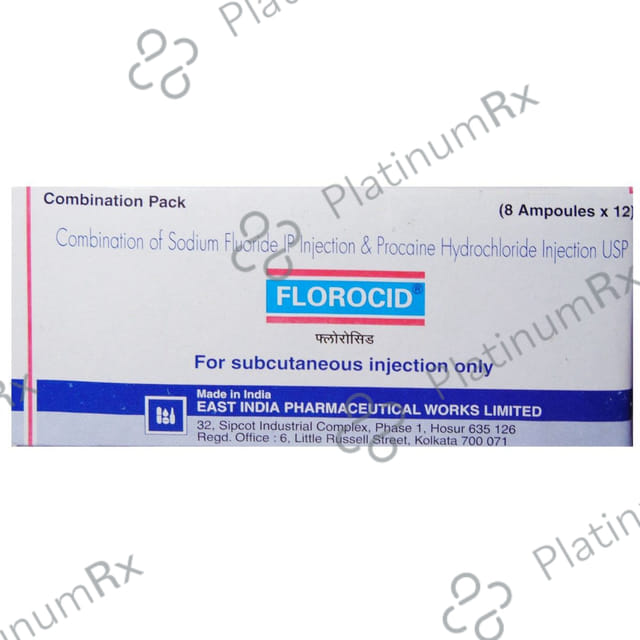
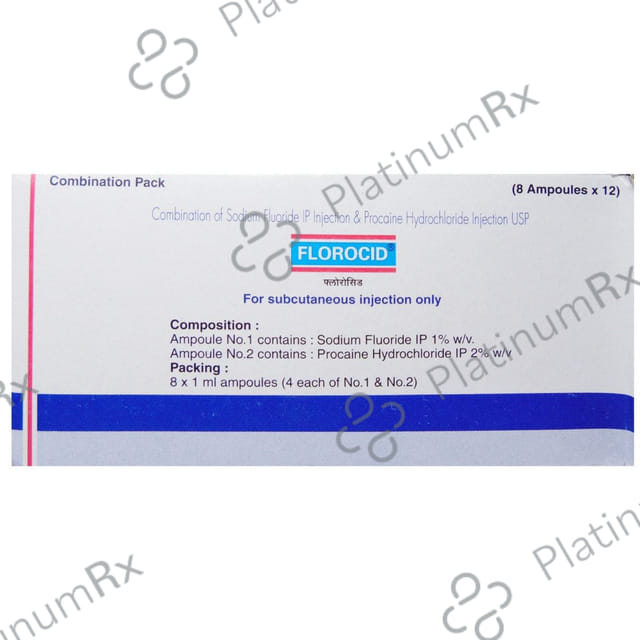
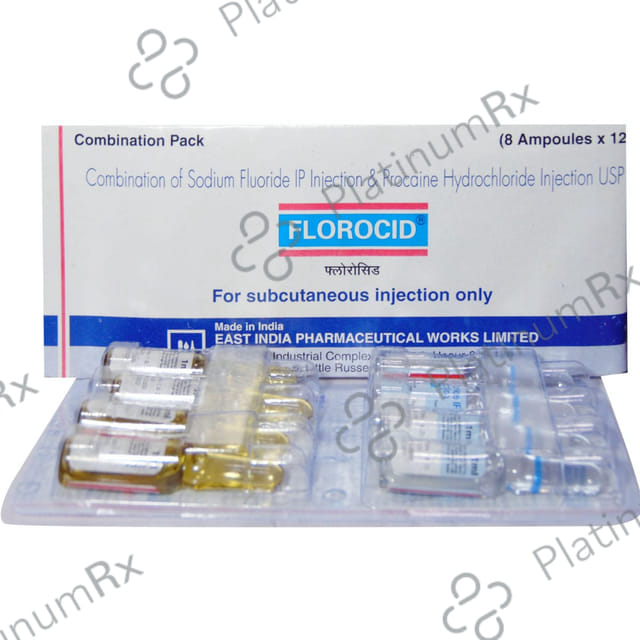
Florocid Injection is a dental formulation containing procaine and sodium fluoride. It is used to provide local anaesthetic relief and strengthen tooth enamel, particularly in individuals with dental sensitivity, minor dental procedures, or increased risk of tooth decay. The formulation supports oral comfort while helping protect teeth against acid-related enamel damage and dental caries. Always use Florocid Injection exactly as directed by your doctor or dentist.
Written by: Srishti Bhukta, B. Pharma
Reviewed by: Dr. Varinderjeet Kaur, MBBS
Last updated on: 02-06-2026
East India Pharmaceutical Works Ltd.

WHO GMP Certified
Long Expiry (>8 Months)
15 Days Easy Returns
General Information

Genuine Medicine
Pay On Delivery
Secure Payment

LegitScript Certified Online Pharmacy


More About Florocid Injection
Quick Summary
Florocid Injection is a dental formulation containing procaine and sodium fluoride. It is used to provide local anaesthetic relief and strengthen tooth enamel, particularly in individuals with dental sensitivity, minor dental procedures, or increased risk of tooth decay. The formulation supports oral comfort while helping protect teeth against acid-related enamel damage and dental caries. Always use Florocid Injection exactly as directed by your doctor or dentist.
Detailed Description
Florocid Injection combines procaine and sodium fluoride, each contributing complementary roles in dental anaesthesia, enamel protection, and oral health maintenance.
Procaine is a local anaesthetic belonging to the ester-type anaesthetic class. It works by reversibly blocking sodium channels in nerve membranes, thereby preventing the initiation and transmission of nerve impulses. This produces temporary numbness and pain relief in the affected area. Procaine is commonly used during minor dental procedures and in formulations intended to reduce oral discomfort and dental sensitivity.
Sodium fluoride is a fluoride salt widely used in preventive dentistry. It strengthens tooth enamel by promoting remineralisation and increasing enamel resistance to acid attack from bacterial metabolism and dietary acids. Fluoride also inhibits bacterial activity in dental plaque, reducing the risk of tooth decay and cavity formation.
The combination of procaine and sodium fluoride is particularly useful in patients with sensitive teeth, early enamel erosion, or those undergoing minor dental procedures where pain relief and enamel protection are both desirable. While procaine provides temporary local anaesthetic action, sodium fluoride supports long-term enamel integrity and dental protection.
Florocid Injection is commonly used in dental care settings for dentinal hypersensitivity, prevention of dental caries, enamel strengthening, and local oral discomfort management. Proper application technique and adherence to the recommended duration of use are important to maximise benefits and minimise the risk of adverse effects.
Uses of Florocid Injection
The uses of Florocid Injection are as follows:
Dental Hypersensitivity
Florocid Injection is used to reduce tooth sensitivity triggered by hot, cold, sweet, or acidic foods and beverages.
Prevention of Dental Caries
Sodium fluoride strengthens enamel and helps reduce the development of cavities and tooth decay.
Minor Dental Procedures
Procaine provides temporary local anaesthetic relief during certain dental interventions.
Enamel Remineralisation
The formulation supports restoration and strengthening of weakened enamel surfaces.
Oral Comfort Support
It may help relieve discomfort associated with minor gum or tooth irritation.
Preventive Dental Care
Regular supervised use may contribute to improved oral hygiene and long-term dental protection.
Benefits of Florocid Injection
Here are the benefits of Florocid Injection:
- Provides Temporary Pain Relief: Procaine helps numb the affected area and reduce dental discomfort during procedures or sensitivity episodes.
- Strengthens Tooth Enamel: Sodium fluoride promotes remineralisation and enhances enamel resistance to acid erosion.
- Reduces Tooth Sensitivity: The formulation helps reduce discomfort associated with exposed dentin and enamel wear.
- Supports Cavity Prevention: Fluoride reduces bacterial acid activity and helps lower the risk of dental caries.
- Dual-Action Dental Support: A single formulation provides both local anaesthetic relief and enamel protection.
- Supports Long-Term Oral Health: Regular appropriate use contributes to stronger teeth and improved oral resilience.
Side Effects of Florocid Injection
Like all medicines, Florocid Injection may cause side effects in some individuals.
Common Side Effects:
- Mild Oral Irritation: Temporary irritation or tingling in the mouth may occur after application.
- Temporary Numbness: Mild numbness of the gums, tongue, or oral tissues may occur due to the local anaesthetic effect.
- Altered Taste: Some individuals may notice a temporary unusual or metallic taste.
Uncommon Side Effects:
- Mild Gum Irritation: Localised redness or irritation of the gums may occur in sensitive individuals.
- Nausea: Accidental swallowing of excessive amounts may cause mild stomach discomfort or nausea.
- Allergic Skin Reactions: Mild rash or itching may occur in susceptible individuals.
Serious Side Effects (Require Immediate Medical Attention):
- Severe Allergic Reaction: Swelling of the face, lips, tongue, or throat with difficulty breathing requires urgent care.
- Fluoride Toxicity: Excessive ingestion may lead to vomiting, abdominal pain, muscle weakness, or serious toxicity symptoms.
- Severe Hypersensitivity to Procaine: Rare but serious allergic reactions including dizziness, breathing difficulty, or collapse require immediate medical attention.
Always consult your doctor or dentist if side effects persist or worsen.
Directions for Use
To ensure safe use:
- Use exactly as prescribed by your doctor or dentist.
- Apply or use only in the recommended quantity.
- Avoid swallowing excessive amounts of the formulation.
- Do not eat or drink immediately after use unless advised otherwise.
- Maintain regular oral hygiene practices alongside treatment.
- Do not exceed the prescribed dose or frequency of application.
How it works
Florocid Injection works through complementary local anaesthetic and enamel-protective mechanisms.
Procaine blocks voltage-gated sodium channels in nerve fibres, preventing nerve impulse conduction and temporarily interrupting pain signal transmission. This results in localised numbness and pain relief in the oral tissues.
Sodium fluoride promotes enamel remineralisation by enhancing the deposition of calcium and phosphate ions into weakened enamel surfaces. It also converts hydroxyapatite into fluorapatite, a more acid-resistant mineral form that strengthens teeth against acid erosion and bacterial attack.
Together, procaine and sodium fluoride provide symptomatic relief from dental discomfort while simultaneously supporting long-term enamel protection and oral health maintenance.
Safety Advice for Florocid Injection

Allergy
Caution
Inform your doctor of any known allergy to procaine, fluoride products, ester anaesthetics, or any component of the formulation before use.

Breastfeeding
Limited information
Consult your doctor before use during breastfeeding.

Pregnancy
Limited information
Safety during pregnancy has not been fully established. Use only if advised by your doctor or dentist.

Driving
Safe
No significant impairment expected under normal use.

Alcohol
Safe
No significant interaction with alcohol is generally expected under normal use.

Liver
Caution
Use carefully in severe liver impairment as local anaesthetic metabolism may be altered. Consult your doctor.

Kidney
Caution
Excessive fluoride accumulation may occur in severe kidney impairment. Consult your doctor before prolonged use.
Kidney
Caution
Use in children should occur only under adult supervision to avoid excessive swallowing of fluoride.

Elderly patients
Caution
Elderly patients may require monitoring for sensitivity to local anaesthetic effects and fluoride exposure.
Quick Tips for Florocid Injection
A few practical measures can help improve treatment outcomes and ensure safe use of Florocid Injection:
- Use only the recommended amount: Excessive fluoride exposure may increase the risk of fluorosis or toxicity.
- Avoid swallowing after application: Spit out excess product whenever applicable.
- Maintain regular brushing habits: Continue standard oral hygiene practices for best results.
- Attend routine dental check-ups: Regular dental evaluation helps monitor enamel health and treatment effectiveness.
- Store safely away from children: Fluoride-containing products may be harmful if swallowed in large amounts.
Storage Advice
Proper storage is important to maintain the stability and effectiveness of Florocid Injection:
- Store at room temperature: Keep away from excessive heat, moisture, and direct sunlight.
- Keep in original packaging: Protects the formulation from contamination and environmental exposure.
- Keep out of reach of children: Prevent accidental ingestion or misuse.
- Check expiry before use: Do not use after the expiry date.
- Close the container tightly after use: Helps maintain product stability and hygiene.
Drug-Food Interaction
Florocid Injection is generally not significantly affected by dietary intake. However:
- Avoid swallowing immediately after use: This allows fluoride adequate contact time with the teeth.
- Limit excessive sugary foods and drinks: Reduces ongoing enamel damage and cavity formation.
- Maintain adequate calcium intake: Supports healthy enamel and tooth mineralisation.
- Avoid excessive fluoride exposure from multiple sources: Inform your doctor or dentist if using other fluoride supplements or treatments.
Interactions with Other Drugs
Florocid Injection may interact with the following medicines:
- Other Local Anaesthetics: Combined use may increase the risk of additive anaesthetic toxicity.
- Fluoride Supplements: Excessive combined fluoride intake may increase toxicity risk.
- Sulfonamide Antibiotics: Procaine metabolites may theoretically reduce sulfonamide antibacterial effectiveness.
- Neuromuscular Blocking Agents: Local anaesthetics may enhance neuromuscular blockade effects in susceptible individuals.
- Cholinesterase Inhibitors: These medicines may slow the metabolism of ester-type anaesthetics such as procaine.
Drug-Disease Interactions
Florocid Injection should be used carefully in the following conditions:
- Kidney Impairment: Reduced fluoride excretion may increase the risk of fluoride accumulation.
- Fluorosis: Excessive fluoride exposure may worsen dental or skeletal fluorosis.
- Allergic Conditions: Patients with known ester anaesthetic allergies may react to procaine.
- Oral Ulceration or Severe Gum Disease: Irritated mucosal surfaces may increase sensitivity to local anaesthetic formulations.
- Cardiac Conduction Disorders: Excessive systemic absorption of local anaesthetics may rarely affect cardiac conduction.
Daily Dose
Usually used as directed by your doctor or dentist depending on the specific formulation, dental indication, and patient age. Dose frequency and duration vary according to clinical need and product type.
What If You Forget to take Florocid Injection?
If a dose is missed, use it as soon as remembered. If it is nearly time for the next scheduled application, skip the missed dose and continue with the regular schedule. Do not use extra amounts to make up for a missed dose.
FAQ
Fact Box
Therapeutic Class
Dental Preparation / Oral Care Medication
Action Class
Local Anaesthetic + Enamel Protectant
Chemical Class
Ester Local Anaesthetic + Fluoride Salt
Habit Forming
No
Disclaimer
PlatinumRx is committed to providing reliable and accurate information to support informed customer decisions. However, all information made available on the Platform, including product descriptions, comparisons, and other content, is provided solely for general informational purposes. Such information is not intended to diagnose, prevent, treat, or cure any medical condition, nor should it be relied upon as a substitute for professional medical advice, diagnosis, or treatment.

Customers also bought


More Medicines By Manufacturer
More Medicines With Salt
Top Selling Medicines
Top Selling Devices