Ondem Tablet: Uses, Dosage, Side Effects & FAQs
Last Updated: October 6, 2026

Summary
Ondem Tablet is used to stop nausea and vomiting caused by cancer chemotherapy, radiotherapy and surgery. It comes as a plain film-coated tablet and as Ondem MD, a mouth-dissolving tablet; both contain ondansetron. It is a prescription-only medicine in India, so it cannot be bought without a valid doctor's prescription. Ondansetron blocks the body's vomiting signal instead of settling the stomach, and it is not a tablet for everyday vomiting such as a stomach infection or food poisoning.
Key Takeaways
- What it is: A prescription tablet that stops nausea and vomiting.
- Active ingredients: Ondansetron, an anti-vomiting medicine that works on the vomiting reflex.
- Used for: Vomiting from chemotherapy, radiotherapy and surgery.
- Not meant for: Vomiting from a stomach bug, children under 4 years, or anyone allergic to ondansetron.
- Prescription: Needed in India. Take it only if a doctor has prescribed it.
- How to take: Swallow the film-coated tablet with water; let the MD tablet dissolve on your tongue.
- Common side effects: Headache, constipation, warmth or flushing; usually pass on their own.
What Is Ondem Tablet?
Ondem Tablet is a single-ingredient anti-vomiting medicine that comes in two forms. Ondem MD tablets break up on the tongue, so no water is needed; the plain Ondem tablet is film coated and is swallowed whole with a little water. Check which one is printed on your pack, because both forms come in 4 mg and 8 mg strengths.
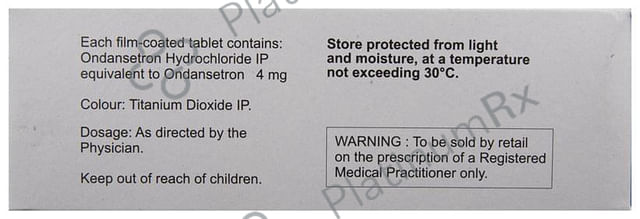

Ondem Tablet Composition (Per Tablet)
| Ingredient | Amount | Type | What it does (in simple words) |
|---|---|---|---|
| Ondansetron (as ondansetron hydrochloride) | 4 mg or 8 mg | Anti-vomiting medicine | Blocks the signal that makes you vomit |
Check the label on your pack. Ondem comes in two tablet strengths, 4 mg and 8 mg, and also in other forms that carry different amounts.
How Does Ondem Tablet Work?
Ondem works on the vomiting reflex, not on the stomach itself. Cancer treatment and surgery make the body release serotonin, a natural chemical that sets off the urge to vomit. Ondansetron blocks the exact spot serotonin attaches to, so the vomiting signal never gets through.
Uses of Ondem Tablet
Doctors usually prescribe Ondem Tablet for:
- Vomiting from cancer chemotherapy, including strong medicines such as cisplatin
- Vomiting from radiotherapy, including whole-body radiation and radiation aimed at the abdomen
- Nausea and vomiting after surgery, taken shortly before anaesthesia begins
- Children aged 4 years and older having chemotherapy, only when a doctor prescribes it (the tablet is not for younger children)
Ondem does not kill the germ behind a stomach infection or food poisoning, and it does not treat whatever is causing the vomiting.
Stomach Bug Vomiting vs Chemotherapy Vomiting: Is Ondem Right for You?
| Vomiting from a stomach bug | Vomiting from chemotherapy or surgery | |
|---|---|---|
| What it feels like | Comes with loose motions, stomach cramps or fever | Starts hours after treatment, with nausea and retching |
| Sign or pattern | Starts suddenly and settles in a day or two | Tied closely to the treatment day |
| Is Ondem suitable? | No | Yes, if prescribed |
| What usually helps | Fluids, rest and the doctor's treatment for the infection | Ondem, taken on the timing your doctor sets |
Using Ondem for an ordinary stomach bug will not stop that vomiting. Because it slows the bowel a little, it can also hide the signs of a more serious gut problem.
How to Take Ondem Tablet
- Take the tablet out of its pack only just before your dose.
- For Ondem MD, place the tablet on your tongue and let it break up on its own. Swallow it with your saliva - you do not need water, and you must not chew it.
- For the plain Ondem tablet, swallow it whole with a little water. Do not crush or chew it.
- Take it at the exact time your doctor tells you, usually shortly before your treatment.
- Finish the full schedule your doctor gave, including any doses after treatment.
- Keep to your usual diet unless your doctor says otherwise.
Dosage of Ondem Tablet
Your doctor sets your dose for your situation. It depends on why you are vomiting, whether you are having chemotherapy, radiotherapy or surgery, your age, and how well your liver is working. In severe liver disease, the total daily dose must not go above 8 mg.
The doses used for each situation are these. Strong chemotherapy such as cisplatin: 24 mg once, as three 8 mg tablets, 30 minutes before treatment. Moderate chemotherapy: 8 mg twice a day, starting 30 minutes before treatment. Radiotherapy: 8 mg three times a day, timed around your sessions. Before surgery: 16 mg, as two 8 mg tablets, one hour before anaesthesia.
Never increase the dose on your own, and do not choose a dose from this list yourself. Taking more than your doctor has set does not control your vomiting better. Too much ondansetron can cause heart rhythm changes and severe constipation.
Children need a dose set by their doctor. Children aged 12 to 17 having chemotherapy take 8 mg 30 minutes before treatment and another 8 mg 8 hours later. Children aged 4 to 11 take 4 mg three times a day. The tablet is not for children under 4 years, and it is not used for vomiting after surgery in children.
If anyone takes too many tablets, go to the nearest hospital emergency department straight away and carry the strip or pack with you. In an emergency call 112, or 108 for an ambulance.
What If You Miss a Dose?
Take it as soon as you remember, as long as your next dose is not nearly due. If it is, skip the missed dose and carry on with your usual schedule. Never take two doses together to catch up.
How Long Does It Take to Work?
Ondem reaches its peak level in your body about two hours after you take it. That is why it is given before your treatment, not after the vomiting starts. If you are still vomiting after treatment, or you cannot keep fluids down, contact your doctor instead of taking more tablets.
Storage
Store the tablets in a cool place, away from light, and keep them in their original pack. Keep them out of the reach of children, and never use them past the expiry date.
Side Effects of Ondem Tablet
Most people take Ondem without any trouble. When side effects happen, they are usually mild and go away on their own.
Common and mild:
- Headache, which is the one most people notice
- Constipation
- A sudden feeling of warmth or flushing
- Hiccups (less common)
- Feeling tired, weak or drowsy
- Chills
Rare but serious (stop the medicine and see a doctor right away):
- Swelling of the face, lips, tongue or throat, a rash or hives, or trouble breathing
- Chest pain, a fast, slow or uneven heartbeat, or fainting
- Sudden blurred vision, or a short spell of lost vision
- Confusion or agitation, hallucinations, fever, heavy sweating, stiff or twitching muscles, or a seizure
- A hard, swollen and painful belly along with bad constipation
These effects come from ondansetron itself, and are more likely if you take more than prescribed. The heart rhythm problems are seen mostly with the injection form rather than the tablet.
Who Should Not Take Ondem Tablet
- Anyone allergic to ondansetron or to any other part of the tablet
- Anyone taking apomorphine, a Parkinson's disease medicine
- Anyone born with long QT syndrome, a rare heart rhythm problem
Precautions
Tell your doctor before taking Ondem Tablet if you have:
- A heart rhythm problem or a family history of one, low potassium or magnesium, heart failure, or water tablets (all raise the risk of an abnormal heartbeat)
- Liver or kidney disease (severe liver disease means a lower daily dose; kidney disease does not change the dose, but your doctor should know)
- A slow-moving or blocked bowel, or you have just had stomach or tonsil surgery (Ondem can hide the warning signs)
- You have had a bad reaction to a similar anti-vomiting medicine such as granisetron or palonosetron (the reaction can come back)
- Phenylketonuria — check with your pharmacist if your pack is a mouth-dissolving tablet
- You are pregnant, planning a pregnancy, or breastfeeding
- You are giving it to a child (the tablet is only for children aged 4 years and older having chemotherapy)
- You are over 65 (the dose is the same, but your doctor should know)
Drug Interactions
| Medicine | What can happen |
|---|---|
| Apomorphine, used in Parkinson's disease | Must not be taken with Ondem — it can cause a severe drop in blood pressure and fainting |
| Medicines that affect heart rhythm (some antibiotics, antifungals, antidepressants and heart medicines) | Higher chance of an abnormal heart rhythm |
| Phenytoin, carbamazepine and rifampicin | Ondem is cleared from the body faster and may work less well |
| Tramadol, a painkiller | Ondem may reduce the pain relief you get |
| Cancer medicines that stress the heart, such as doxorubicin | Higher chance of heart rhythm problems |
| Antidepressants and other medicines that raise serotonin | Rare risk of fever, heavy sweating, twitching muscles and confusion |
Always tell your doctor about every medicine, supplement or home remedy you are using.
Alcohol does not interact harmfully with Ondem. It can make nausea and dehydration worse, so it is best avoided while you are unwell.
Frequently Asked Questions About Ondem Tablet
When to See a Doctor
Ondem only holds back the vomiting. It does not treat what is causing it. See a doctor quickly if you have:
- Vomiting that will not stop, or you cannot keep any fluid down
- Blood in the vomit, or vomit that looks like coffee grounds
- A swollen, hard or very painful belly, or you have stopped passing stool or wind
- Chest pain, a racing or uneven heartbeat, or you faint
- Swelling of your face, lips or throat, or trouble breathing
- Confusion, agitation, hallucinations, fever or twitching muscles
The Bottom Line
Ondem Tablet works well for the situations it is meant for: vomiting from chemotherapy, radiotherapy and surgery. Timing matters more than anything else, because it works best when it is taken before treatment, exactly as your doctor schedules it. Headache and constipation are the usual side effects and they settle on their own. It is not a general vomiting tablet.