Flexon Tablet: Uses, Dosage, Side Effects & Safety Guide
Last Updated: October 6, 2026

Summary
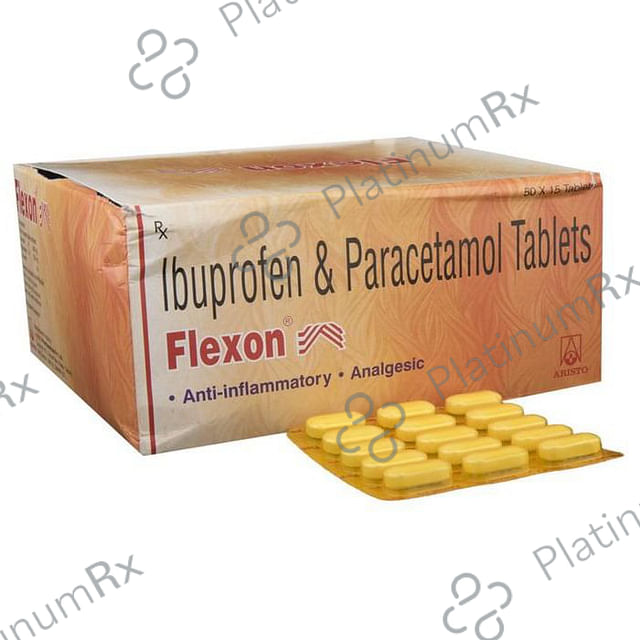
Flexon Tablet is a pain and fever medicine that combines two painkillers in one tablet: ibuprofen and paracetamol. Doctors prescribe it for short-term pain such as headache, toothache, period pain and muscle or joint pain, and to bring down fever. In India it is a prescription-only medicine, so you cannot buy it without a valid doctor's prescription. Ibuprofen eases pain and swelling, and paracetamol eases pain and lowers fever.
Key Takeaways
- What it is: A prescription tablet that combines two painkillers, one anti-inflammatory and one fever reducer.
- Active ingredients: Ibuprofen 400 mg and paracetamol 325 mg.
- Used for: Short-term pain — headache, toothache, period pain, muscle and joint pain — and fever.
- Not meant for: Dengue fever, stomach ulcers, aspirin-sensitive asthma, severe kidney or liver disease, late pregnancy.
- Prescription: Needed in India. A pharmacy cannot sell it without a valid doctor's prescription.
- How to take: Swallow it whole with water, with or after food, exactly as your doctor advised.
- Common side effects: Stomach pain, indigestion, nausea, headache and dizziness; usually mild and short-lived.
What Is Flexon?
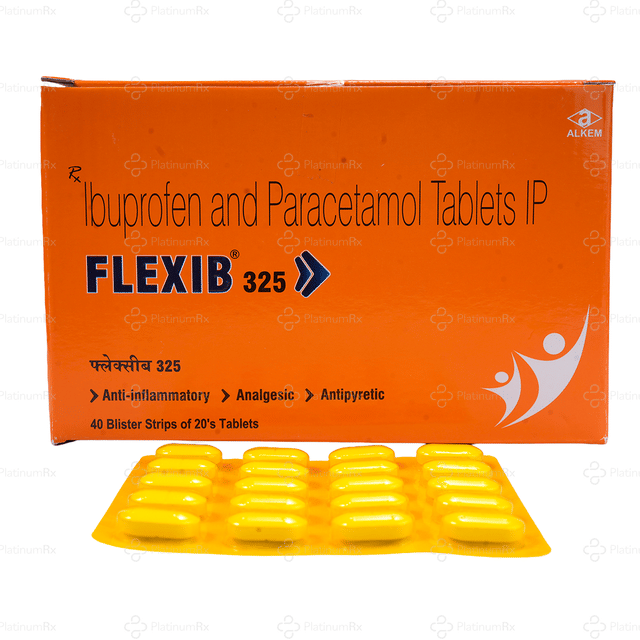
Flexon is a combination medicine for pain and fever, with two painkillers in a single tablet. The brand comes in other forms, and they are not interchangeable. This article is about the plain Flexon tablet, the adult form; the children's liquid, Flexon MR and Flexon Gel are different products.
Flexon Composition (Per Tablet)
| Ingredient | Amount | Type | What it does (in simple words) |
|---|---|---|---|
| Ibuprofen | 400 mg | Anti-inflammatory painkiller | Eases pain and swelling, and brings down fever |
| Paracetamol | 325 mg | Pain and fever reliever | Eases pain and lowers a high temperature |
How Does Flexon Work?
Think of pain as a door with two locks. Flexon has a key for each lock, so the pain has to get past both.
- Ease the swelling: Ibuprofen is an anti-inflammatory painkiller. It turns down the chemicals your body makes at an injured spot, so the area feels less hot, swollen and sore. It also lowers fever.
- Calm the pain and fever: Paracetamol works mainly in the brain. It turns down the pain signals you feel and resets the body's temperature, so fever comes down.
Because the two work in different ways, ibuprofen and paracetamol together can ease acute pain better than either one alone.
Uses of Flexon
Doctors usually prescribe Flexon for:
- Headache and toothache, the everyday aches these two painkillers are most often used for
- Period pain, the cramping pain many women get during their monthly cycle
- Muscle, joint and back pain, including sprains and strains
- Fever, when paracetamol alone has not been enough
- Pain after a small injury or a minor procedure, if your doctor advises it
Flexon does not kill bacteria or viruses, so it will not treat the infection behind your fever. It is meant for short-term relief, not for long-term pain.
Dengue Fever vs Everyday Fever and Pain: Is Flexon Right for You?
| Dengue fever | Everyday fever and pain | |
|---|---|---|
| What it feels like | Sudden high fever with severe body, joint and eye pain, and great weakness | Mild fever with a headache, sore throat, cold or a sore muscle |
| Sign / test | Platelets fall; warning signs such as bleeding gums, nose bleeds, black stools or vomiting | No bleeding and no fall in platelets |
| Is Flexon suitable? | No | Only if prescribed |
| What usually helps | Paracetamol only, plenty of fluids and daily doctor follow-up | Rest, fluids and paracetamol; ibuprofen only if your doctor advises |
How to Take Flexon Tablet
- Swallow the tablet whole with a glass of water.
- Take it with or after food, or with milk, to protect your stomach.
- Take it at the times written on your prescription, keeping the gap your doctor advised between doses.
- Do not take extra tablets when the pain is bad or the fever is high.
- Do not crush, break or chew the tablet.
How Much to Take
Your doctor decides how much and how often, based on your age, weight, symptoms and other health conditions. The right amount for you is the one written on your prescription, and it can be different from what a friend or family member takes.
Never increase the dose on your own. More tablets do not ease pain faster, but they do raise the risk of stomach bleeding from ibuprofen and liver damage from paracetamol.
Children are not given this tablet. If your child needs pain or fever relief, the doctor will decide whether the children's suspension is suitable and what amount to give.
If you or someone else has taken too many tablets, go to the nearest hospital emergency department straight away, even if there are no symptoms yet. Carry the strip or box with you. In India, call 112 for emergency help or 108 for an ambulance.
What If You Miss a Dose?
Take it as soon as you remember, if your next dose is still a few hours away. If the next dose is almost due, skip the missed one and carry on as usual. Never take two doses together to catch up.
How Long Does It Take to Work?
Relief usually starts soon after a dose and wears off after a few hours. If you are no better after two to three days, or the fever keeps coming back, see your doctor.
Storage
Keep the strips in a cool, dark, dry place, away from direct sunlight and damp. Store it well out of the reach of children, and do not use the tablets after the expiry date printed on the pack.
Side Effects of Flexon
Most people take Flexon without any trouble. When side effects happen, they are usually mild and settle on their own.
Common and mild:
- Stomach pain, indigestion or feeling sick
- Headache
- Dizziness
- Diarrhoea or constipation
- Skin rash
Rare but serious (stop the medicine and see a doctor right away):
- Black, tarry stools, vomit that looks like coffee grounds, severe stomach pain that does not settle, or unusual bruising and bleeding
- Swelling of the face, lips or tongue, sudden wheezing or difficulty breathing
- Yellowing of the eyes or skin, dark urine, or passing much less urine than usual
- Chest pain, breathlessness or weakness on one side of the body
- A spreading skin rash with fever, blistering or peeling skin
The stomach problems come from ibuprofen, which also carries a small risk of heart attack or stroke, higher with high doses or long-term use.
Who Should Not Take Flexon
- Anyone allergic to ibuprofen, paracetamol or similar painkillers
- Anyone who has had a stomach ulcer or stomach bleeding
- Anyone whose asthma or wheezing is triggered by aspirin or similar painkillers
- Anyone with severe kidney, liver or heart disease
- Anyone who has just had heart bypass surgery
- Women in the last three months of pregnancy
Precautions
Tell your doctor before taking Flexon if you:
- Often get indigestion or acid reflux, because ibuprofen can irritate the stomach lining
- Have asthma, hay fever or other allergies (painkillers like ibuprofen can sometimes set off wheezing)
- Have kidney or liver disease (the medicine may build up or need a lower amount)
- Have high blood pressure, heart failure, or a past heart attack or stroke (ibuprofen can raise blood pressure and strain the heart)
- Take blood thinners or steroid tablets (both raise the chance of stomach bleeding)
- Are pregnant, planning a pregnancy, or breastfeeding (anti-inflammatory painkillers are usually avoided in later pregnancy)
- Are over 65, or drink alcohol often (stomach bleeding is more likely with age, and alcohol adds to the risk)
Drug Interactions
| Medicine | What can happen |
|---|---|
| Other anti-inflammatory painkillers (aspirin, naproxen, diclofenac) | Higher chance of stomach ulcers and bleeding |
| Blood thinners (warfarin, clopidogrel, aspirin) | Bleeding becomes more likely |
| Other paracetamol products (cold, flu and headache medicines) | The paracetamol adds up, which can harm the liver |
| Steroid tablets (such as prednisolone) | Higher chance of stomach ulcers and bleeding |
| Blood pressure medicines and water tablets (diuretics) | Blood pressure and kidney function can be affected |
| Methotrexate and lithium | Levels of these medicines can rise and cause side effects |
| Antidepressants (SSRIs) | Higher chance of stomach bleeding |
| Medicines that change how paracetamol is absorbed (metoclopramide, domperidone, colestyramine) | The paracetamol may act faster or be absorbed less |
FAQs About Flexon Tablet
When to See a Doctor
Painkillers only ease the symptoms. See a doctor quickly if you have:
- Fever lasting more than three days, or a fever that keeps coming back
- Pain that is getting worse instead of better
- Black, tarry stools, or vomit that looks like coffee grounds
- Bleeding gums, nose bleeds or blood in your urine while you have fever
- Swelling of the face, lips or tongue, wheezing or difficulty breathing
- Yellow eyes or skin, dark urine, or passing very little urine
The Bottom Line About Flexon Tablet
Flexon is a prescription pain and fever tablet that pairs ibuprofen with paracetamol for short-term relief. Take it only at the amount and timing your doctor has written, with or after food, and never add another painkiller on your own. Most people get on well with it, and the common side effects — stomach upset, nausea and dizziness — usually pass.
References