Ascoril LS Syrup: Uses, Side Effects & Dosage Guide
Last Updated: October 6, 2026

Summary
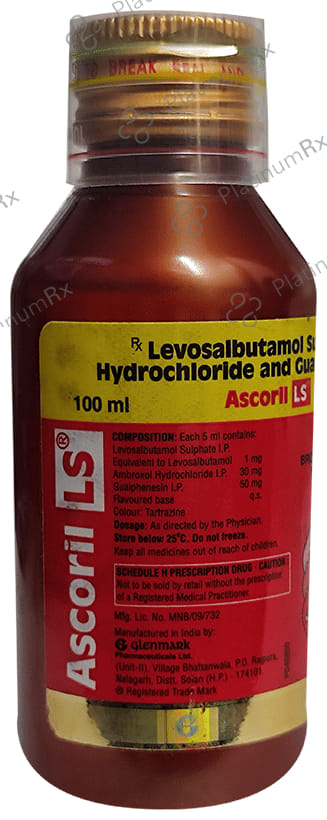
Ascoril LS Syrup is a medicine used to relieve wet cough with mucus. It contains three medicines: Levosalbutamol, Ambroxol, and Guaiphenesin. It helps loosen and thin mucus, making it easier to cough out, while also helping to open the airways and make breathing easier.
Ascoril LS may be used for cough associated with conditions such as bronchitis, asthma, COPD, and other breathing problems where mucus and narrowed airways are present.
- Levosalbutamol: helps relax and open the airways.
- Ambroxol: thins mucus and makes it easier to remove.
- Guaiphenesin: helps loosen mucus so it can be coughed out more easily.
Key Takeaways
- Prescription-only in India. Do not start it on your own.
- Approved for tight, wheezy breathing in bronchial asthma and chronic bronchitis.
- Check the exact strength printed on your pack.
- Not to be used in children under 6 years.
- Stop and get help for a spreading skin rash or sudden worsening of breathing.
What is Ascoril LS Syrup?
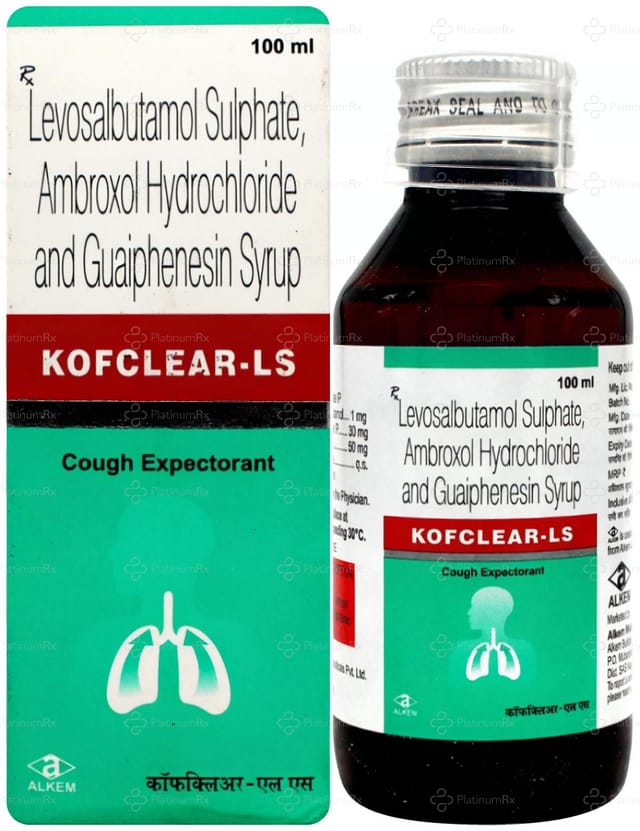
Ascoril LS Syrup is a fixed-dose combination syrup. It contains levosalbutamol, ambroxol hydrochloride and guaifenesin (also spelt guaiphenesin in India) in one bottle.
Check the exact strength and the ingredients list printed on your pack, because these can vary between variants.
This is a prescription-only medicine in India. It cannot be bought without a valid doctor's prescription.
How does Ascoril LS Syrup work?
- Levosalbutamol attaches to beta-2 receptors on the muscle cells in the walls of your airways. This makes that muscle relax, so the airways open wider and breathing feels easier.
- Ambroxol is a mucolytic. It makes mucus in your airways thinner and less sticky and helps the tiny hair-like cilia move it up, so you can cough it out.
- Guaifenesin is an expectorant. It adds fluid to thick, sticky mucus so it loosens and is easier to cough up. It does not help a dry cough.
What is Ascoril LS Syrup used for?
It is used for the symptomatic relief of bronchospasm in bronchial asthma and chronic bronchitis, when your doctor has prescribed it. Bronchospasm is the tightening of the muscles around the airways that makes breathing hard and causes wheezing.
- Bronchial asthma - to ease tight, wheezy breathing.
- Chronic bronchitis- to loosen thick mucus so coughing clears it better.
It is not for:
- A dry cough with no mucus.
- A common cold or flu.
- Treating the infection itself. It does not kill bacteria or viruses.
- Replacing your regular asthma inhaler or preventer medicine.
How to take Ascoril LS Syrup
Take exactly the dose your doctor prescribes. Do not exceed the stated dose, and do not give or take more than four doses in 24 hours. For children aged 6 to 12 years, use only the dose your doctor prescribes.
- Shake the bottle well before each dose.
- Measure the dose with the cup or spoon that came with the bottle, not a kitchen spoon.
- Take it with or without food.
- If you miss a dose, take it when you remember. If the next dose is almost due, skip it. Never take two doses together.
Taking too much can cause a fast heartbeat, shaky hands and other serious problems. If you or your child has taken too much, contact your doctor or the nearest hospital straight away.
Do not stop any other asthma medicine on your own. This syrup is not a substitute for a preventer inhaler and is meant for short-term relief only.
Who should not take Ascoril LS Syrup?
Do not take it if any of these apply to you:
- Allergy to levosalbutamol, ambroxol, guaifenesin or any other ingredient.
- Existing ischaemic heart disease (heart disease from narrowed arteries), or major risk factors for it.
- An active stomach (gastric or peptic) ulcer.
- Threatened miscarriage in the first or second trimester of pregnancy.
- Age under 6 years.
Who needs to be careful with Ascoril LS Syrup?
Tell your doctor before taking it if you have any of these:
- Heart problems, high blood pressure or an irregular heartbeat → your doctor may want to check you first.
- Diabetes → this medicine can change blood sugar levels.
- An overactive thyroid, or fits (convulsions) → use it only under medical advice.
- A tendency to stomach ulcers → ambroxol may irritate the stomach.
- Kidney or liver problems → the dose may need adjusting.
Pregnancy. There are no good studies of this combination in pregnant women, so it should be used only if your doctor decides it is clearly needed. It must not be used for threatened miscarriage in the first or second trimester.
Breastfeeding. It is not known whether these ingredients pass into breast milk. Ask your doctor before using it while breastfeeding.
Older adults. There is not enough information on how people over 65 respond to this combination. Your doctor will adjust the dose based on how well it works for you.
Children aged 6 to 12. Use only the dose your doctor prescribes.
Side effects of Ascoril LS Syrup
Most side effects are mild and settle on their own. The common ones are:
- Fine tremors of the hands
- Palpitations or a faster heartbeat
- Muscle cramps
- Headache, dizziness or nervousness
- Nausea, vomiting, stomach discomfort or loose motions
- Changed taste or a dry mouth
- Difficulty sleeping
Stop the syrup and get medical help straight away if you notice:
- Wheezing or tightness that gets worse soon after a dose. This can be life-threatening.
- Swelling of the face, lips or throat, or any severe allergic reaction.
- A spreading skin rash, blisters or peeling skin. European regulators added a warning in 2015-2016 that ambroxol-containing medicines carry a small risk of serious skin reactions, and that treatment should be stopped at once if a new rash appears. The Indian labelling for this combination carries the same caution.
- A very fast or irregular heartbeat, chest pain, or fainting.
- Unusual muscle weakness, which can be a sign of low potassium.
If any of these happen, call 112 for emergency help, or 108 for an ambulance in most states, and stop the syrup.
Tremor and palpitations can affect your driving. Do not drive until you know how this syrup affects you.
Interactions
- Other salbutamol-like inhalers or adrenaline-type medicines → extra fast heartbeat and tremor.
- Beta-blockers such as propranolol, atenolol or metoprolol → these can block the airway-opening effect and cause severe bronchospasm in asthma.
- Water tablets (diuretics), theophylline-type medicines and steroids → they can add to potassium loss.
- Digoxin → this syrup may lower digoxin levels, so your doctor may check them.
- MAO inhibitors and tricyclic antidepressants → stronger effects on the heart and blood pressure.
- Antibiotics such as amoxicillin, cefuroxime, erythromycin and doxycycline → ambroxol raises the antibiotic level in lung tissue.
- General anaesthetics (halogenated) → this syrup should normally be stopped at least 6 hours before surgery with these anaesthetics. Tell your surgeon and anaesthetist that you take it.
- Cough suppressants such as codeine or dextromethorphan → do not combine them with this syrup. They stop the cough that clears the mucus this syrup is loosening, so secretions can build up in the airways.
- Other cough and cold medicines → you may double-dose on the same ingredient.
Tell your doctor about every other medicine you take.
Storage and handling
- Store below 30°C, protected from light.
- Keep it out of the reach of children.
- Do not use it after the expiry date on the label.
This article gives general information only. How this prescription medicine suits you depends on your own condition. Always follow your doctor's advice, and ask your doctor or pharmacist if anything is unclear.
FAQs
References